"fabric"

Galaxy

Cirrus Solids Improv Quilt

Galaxy

60'' x 60''

Improv isn't just for wonky cuts and pulling fabric out of a bag. You can start with a shape, precise cuts, and a playful spirit. That's exactly what I did when I started this quilt, oh... almost 3 years ago.

I did have a plan, but when that didn't work I had to figure out something else that would still make a beautiful quilt. There was no way this beautiful fabric was going to waste. It is made from the Cloud 9 Cirrus Solids, their first colour release. It is extremely soft and oh so delicious. Bonus, it is certified organic cotton. So when my initial intention did not work out, I came up with an alternative quilt top.

This is what playing with improv teaches you to do - figure out a solution no matter what. Whether it is running out of background fabric or making a mistake in piecing, whether you simply don't like the way it turned out or you suddenly want to make the quilt bigger, having the spirit of improv means you can come up with a low stress solution. It is about tapping into that ability to embrace the unknown and find a path forward. 

So back to the quilt.
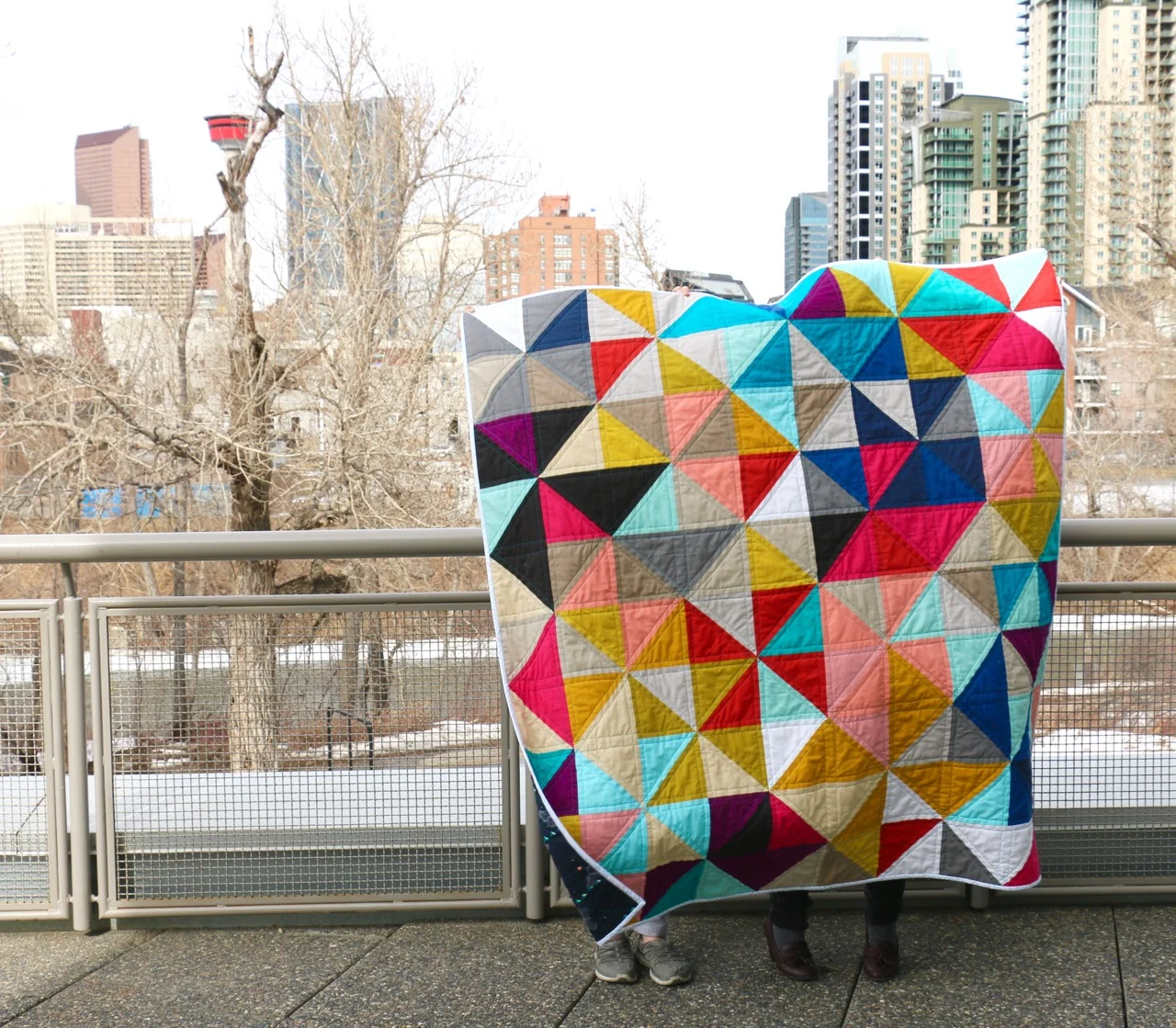
Half Square Triangles Quilt

When I took my mostly random half square triangles and settled on a layout - after a lot of design wall play - the top got pieced and added to the pile of tops in the closet. Periodically I would pet it (that fabric is seriously soft) but that's about it. Fast forward to last month when friends of ours asked if just maybe I had a quilt to donate to a charity event they were hosting. I think my husband answered for me, with the strongest yes ever. Rather than take a finished, and therefore used, quilt from the racks I decided to finish one fresh for them.

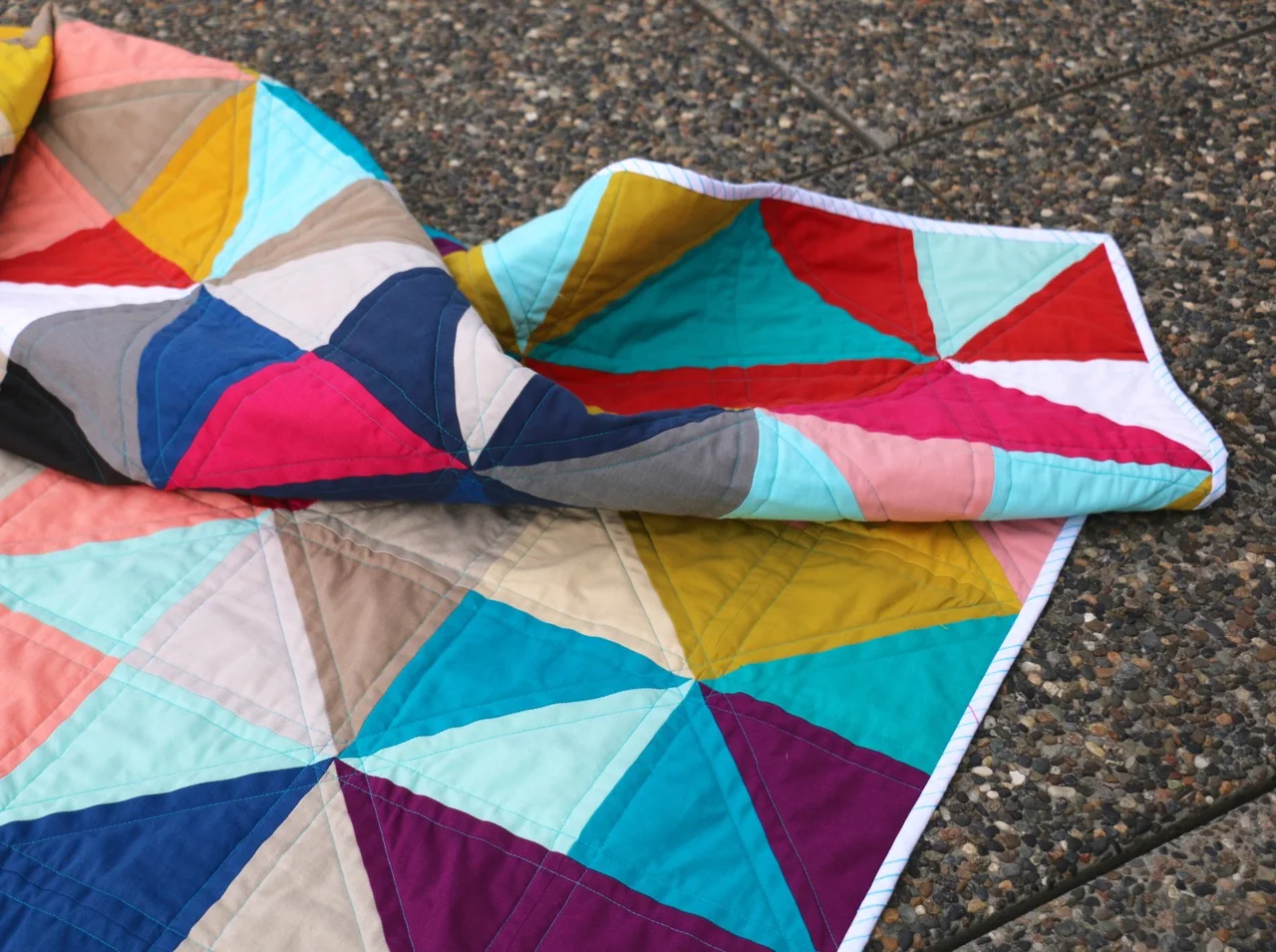
I've also learned that for charity donations like this people seem to like quite traditional or quite bold quilts. This one is definitely bold! The other thing I've learned is that while I am generous, I can't be ridiculous with my time. I do have that family/work thing to do. So I went with straight line quilting that actually added some movement plus a cool secondary pattern of an Ohio Star where the lines intersected. I picked a turquoise Aurifil because when any colour will work that is always an excellent choice! It also looked great on the back, one of the first Prints from Rashida Coleman-Hale with Cotton and Steel, Moonlit.
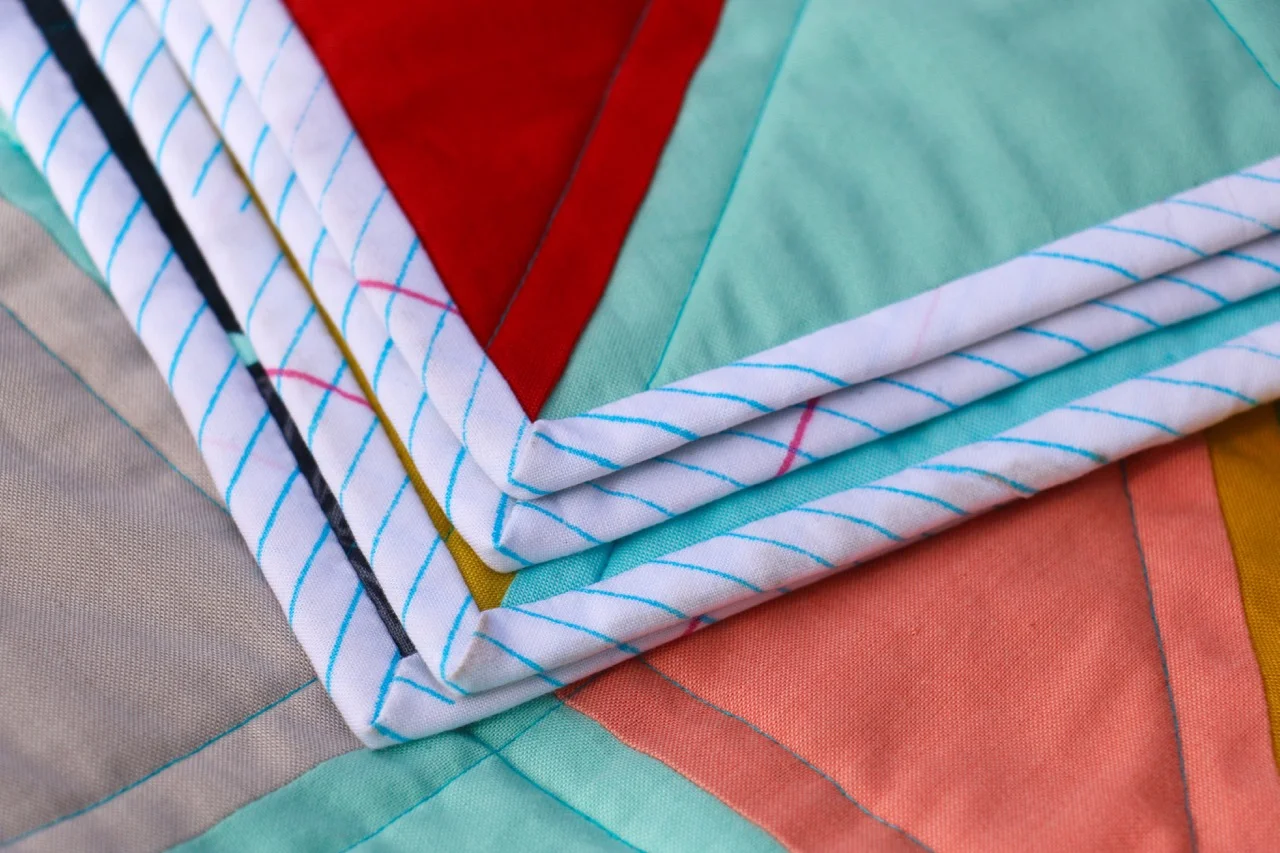
Heather Givans Paper Obsessed Quilt Binding

Binding choice was probably the most difficult. Again, any solid colour would likely do. I was leaning towards hot pink or carrying the turquoise out. Then I spied the perfect fabric peeking out of my stash - a ruled sheet of paper inspired print from Paper Obsessed by Heather Givans (of Crimson Tate fame). It's already on the bias, and the touch of blue and pink is just enough to make it so much more than a solid binding. And thankfully it looked great on the back.

The quilt has already been auctioned off. I'm always a little bit sad that they don't fetch more, but happy that the quilt is going to a loving home. And I met the winning bidder so I know it will be well taken care of. I may however, need to restash some of those Cirrus Solids now.
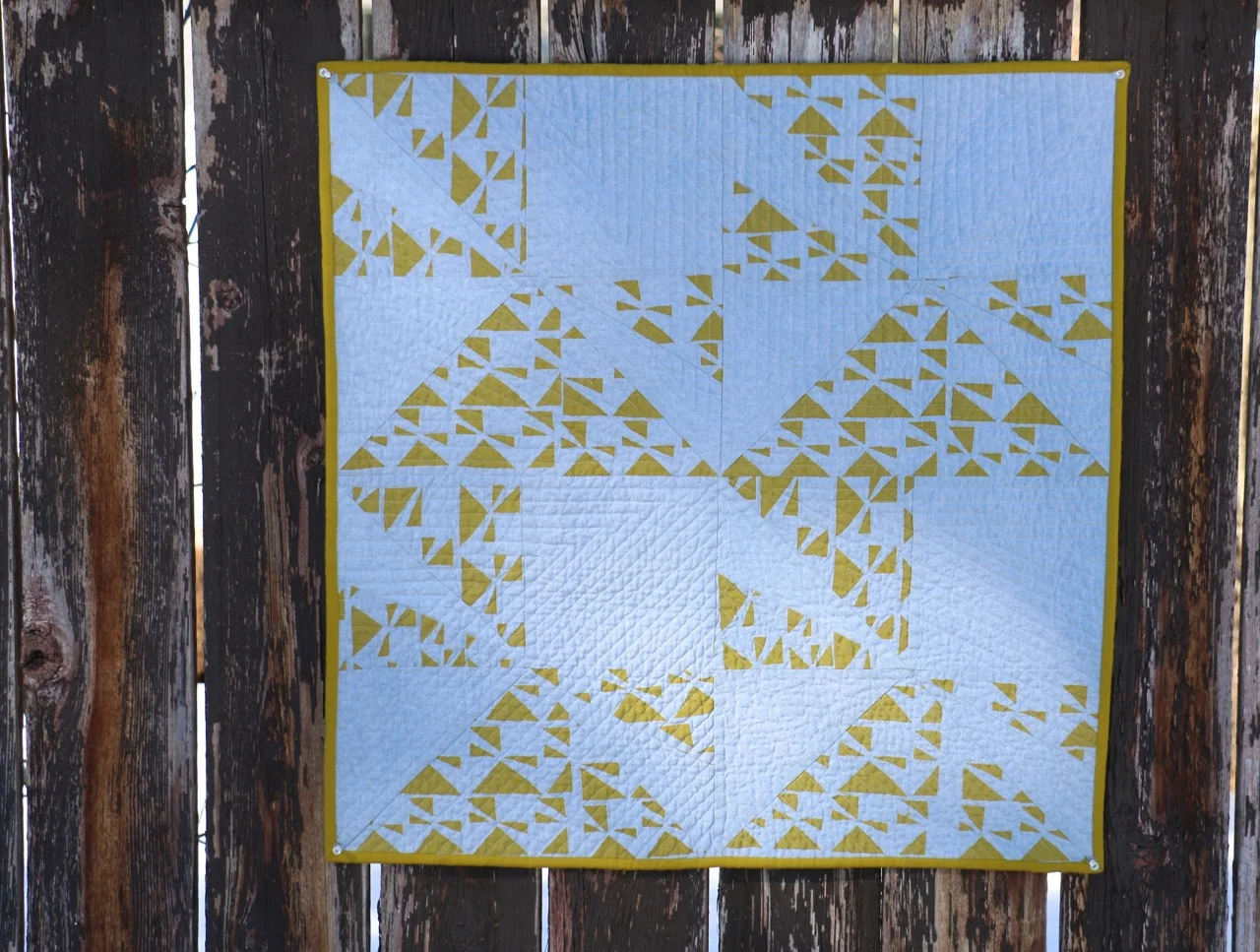
Kawasaki's Theorem Quilt with Maze and Vale

Kawasaki's Theorem quilt with Maze and Vale

Kawasaki's Theorem 1

28'' x 28''

It's a bold and cocky move to name anything Number 1. It completely implies a series. That's a lot of pressure to put on yourself... if you care that much.

I met never get to Kawasaki's Theorem #2. That's okay. In my head this was just the first round of play though. So maybe, just maybe, there will be more.

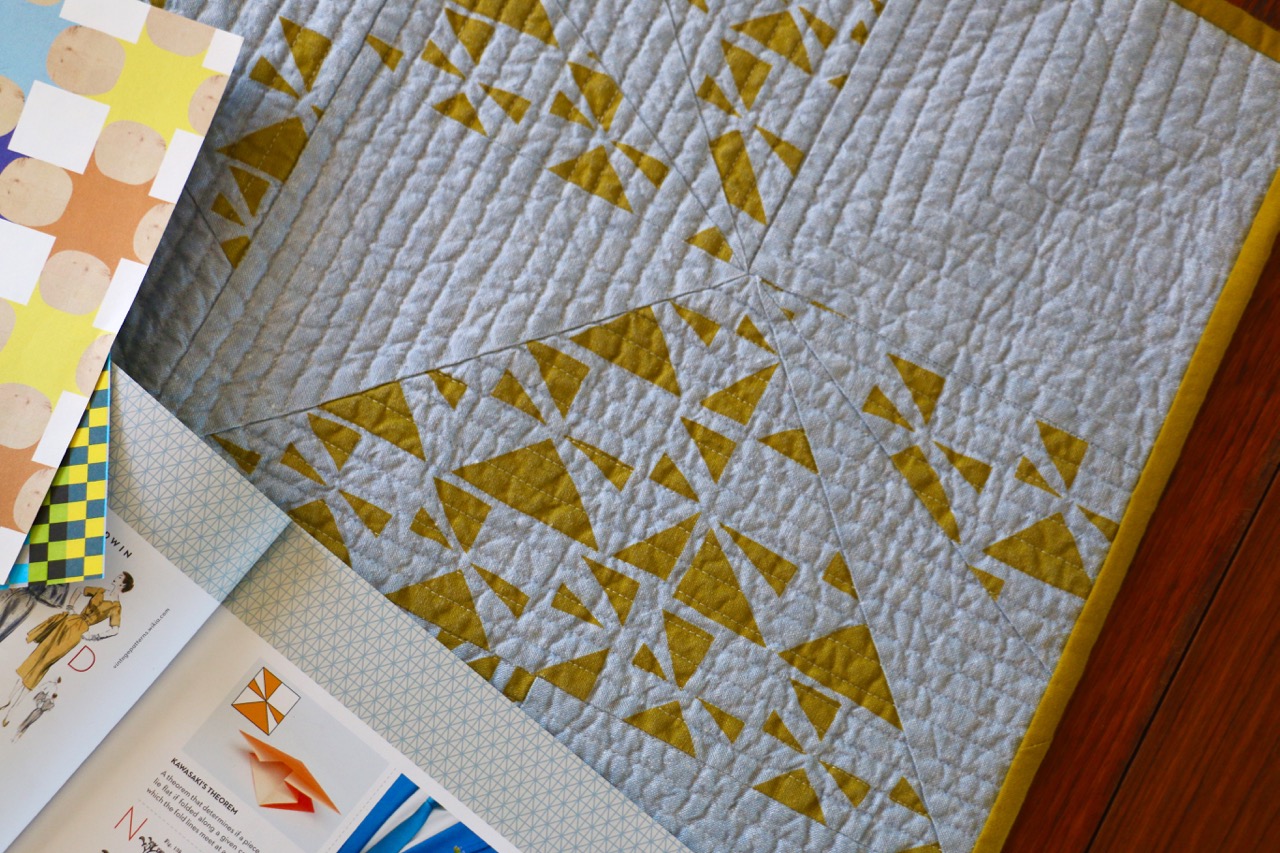
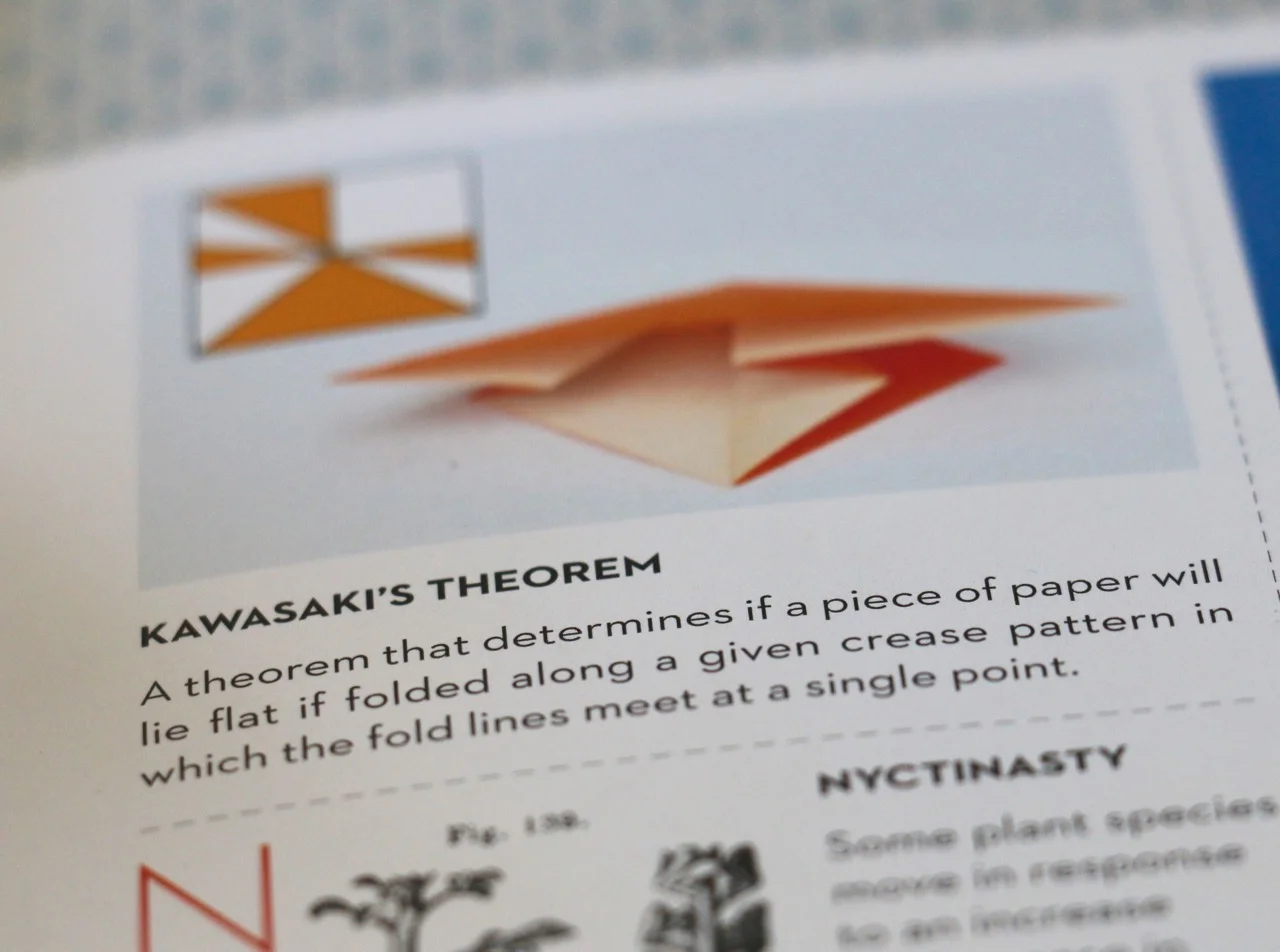
This particular quilt started before there was fabric. It was an image in Uppercase Magazine, an issue on paper. The image is actually about a paper folding and angles. There is a formula and everything. It was the image that illustrates the theorem that got me though. It immediately screamed quilt block. I sketched up some repeats for fun, then dated and parked the idea.

Kawasaki's Theorem Uppercase Magazine

When in Australia I had the great chance to take a private silk screening class with Leslie from Maze and Vale. Rather than use her screens she encouraged us to create our own stencil. I pulled out my ever present sketchbook to see if anything struck me as a possibility. My Kawasaki's Theorem sketches were there and my brain was broken for any other ideas so I went with it.  We printed fabric and went on our merry way. 

Then I had the idea to go very meta with my fabric. Sometimes I can be rather cheesy. I designed a block based on the theorem and used the fabric in the block. Then I made a few more. And then, as I contemplated my quilting plan, I extended the design there and quilted it to reflect the theorem as well. I am a total nerd.

Kawasaki's Theorem Uppercase Magazine Maze and Vale

Who knows if Number 2 and 3 in the series will ever get made, but there are sketches. If not, the play is still totally worth it. It is in the play that new ideas grow, techniques get better, and the joy is found.


Morning Make II - Improv Curves plus Tag Fabric

Improv Curves/Morning Make

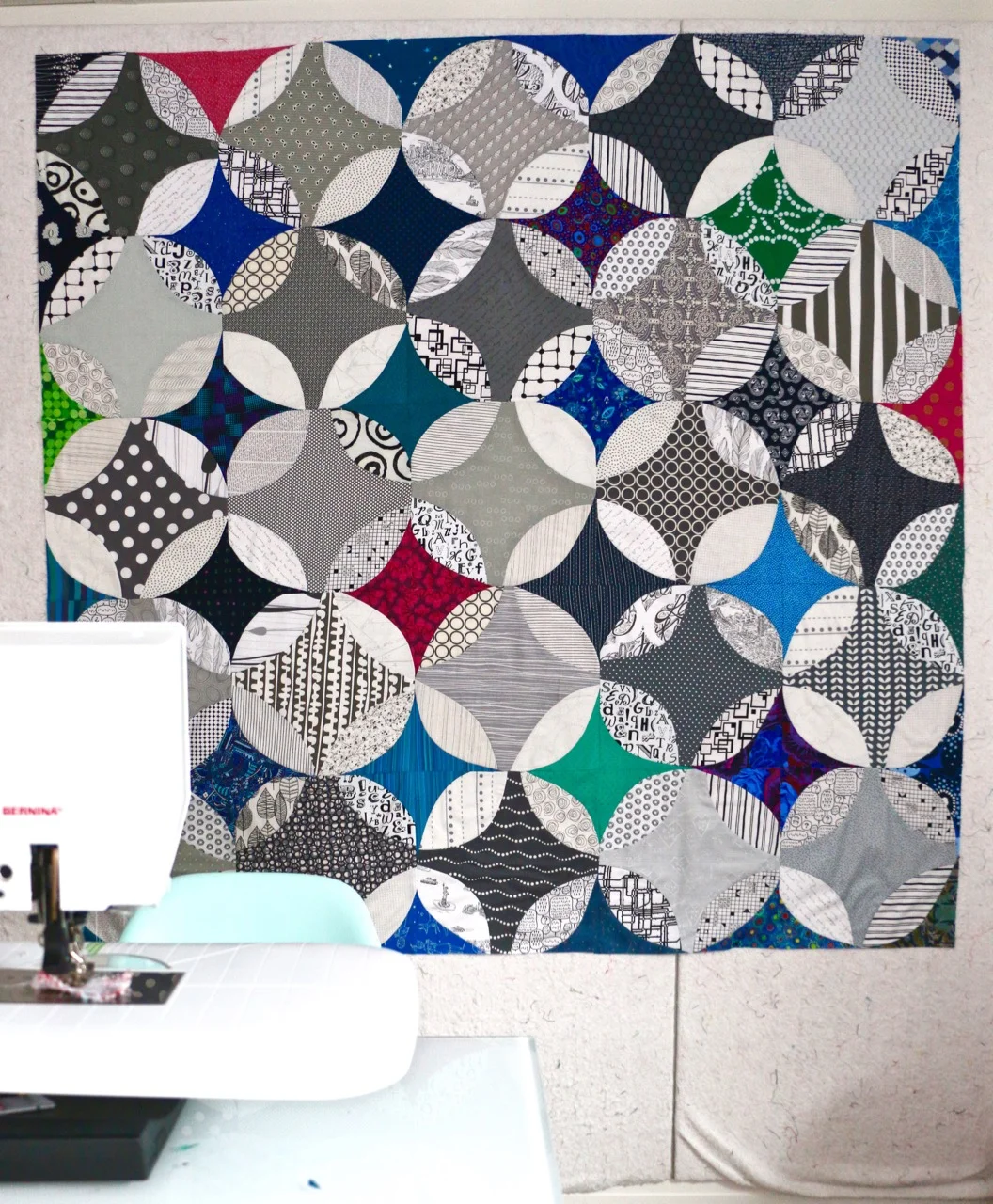
Ever have those moments where you see something and just have to try it? At some point in December I saw a block that Sharon, at Color Girl Quilts, was working on. Hers was very precise - she does really cool things with curves - and I wanted to see if I could do the same thing with improvised curved piecing. Turns out I could.

I only made a couple of blocks to try it, with no intention to make more. But I really, really liked the blocks and I was still more curious. So I made a few more. Once the secondary patterns emerged I was hooked! This project became my Morning Make over the holidays. I finished it up on the weekend. It became very addictive!

Our quilts are not the same at all. That being said, you can certainly see the link between mine and her original. The main block structure is the same. It is the piecing technique and the final layout that make the big difference.  

Improvised Curved Piecing, Tag Fabric
Improvised Curved Piecing, Modern Quilts

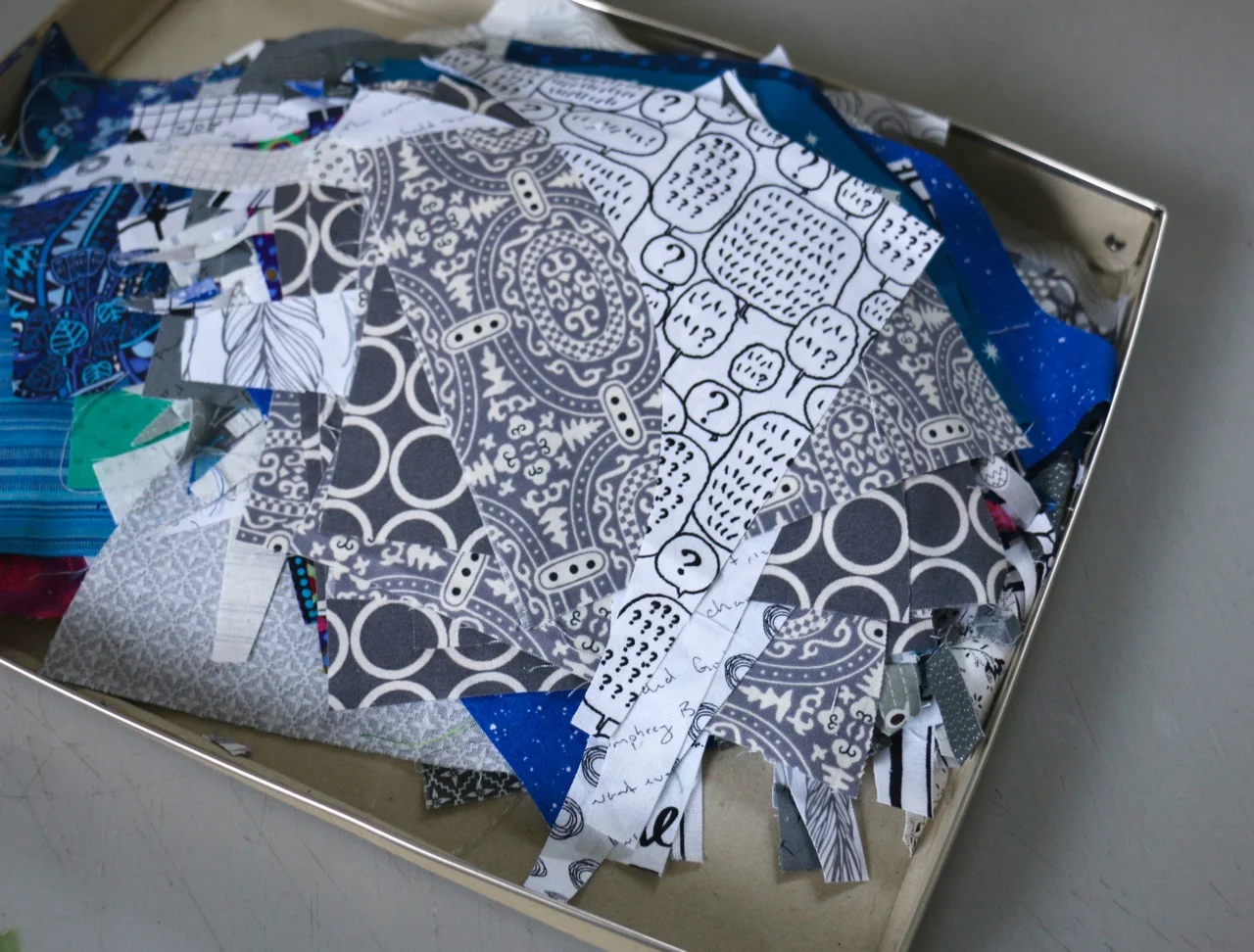
For the technique I use (and teach) when making improv curves there are some leftovers. Very usable leftovers. Think enough for a whole other quilt. Quite often I play and they become part of the original work. This time, however, that wasn't going to work for the repeating design. Now I am sewing together all the leftovers from cutting those curves. It will be enough for a whole other quilt (or the back). I just want to get them sewn together as blocks for now and will play with layout options another day.

One of the best parts of this quilt - for me, at least - was getting to use my own fabric in it! That's right, Tag is now available through Connecting Threads. I have a lot to share about that in the coming weeks, but it was a lot of fun for me to see how well it played with the rest of my stash. Can't way to show you more.

The Oldest WIP - My Y2K quilt

Y2K Quilt Top 1

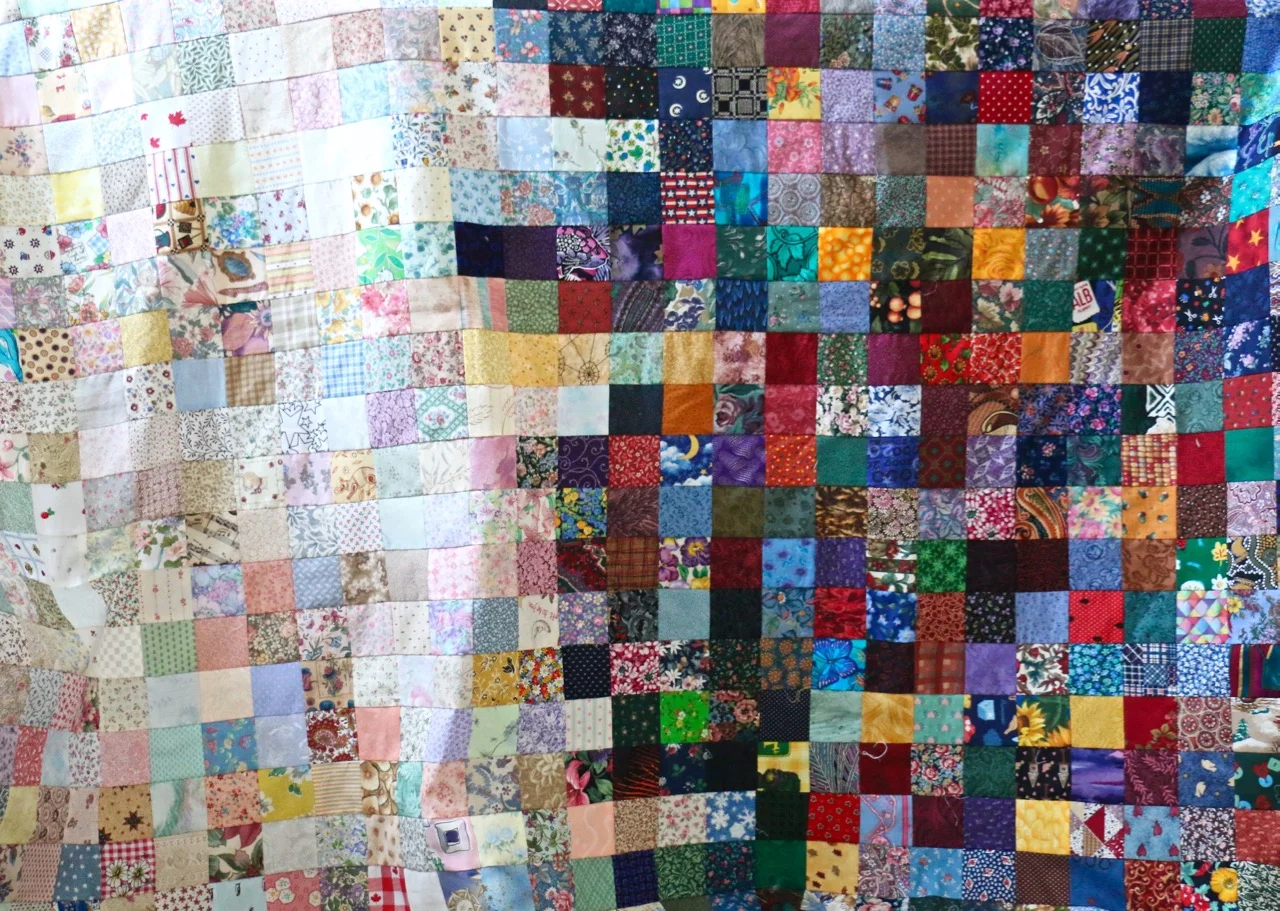
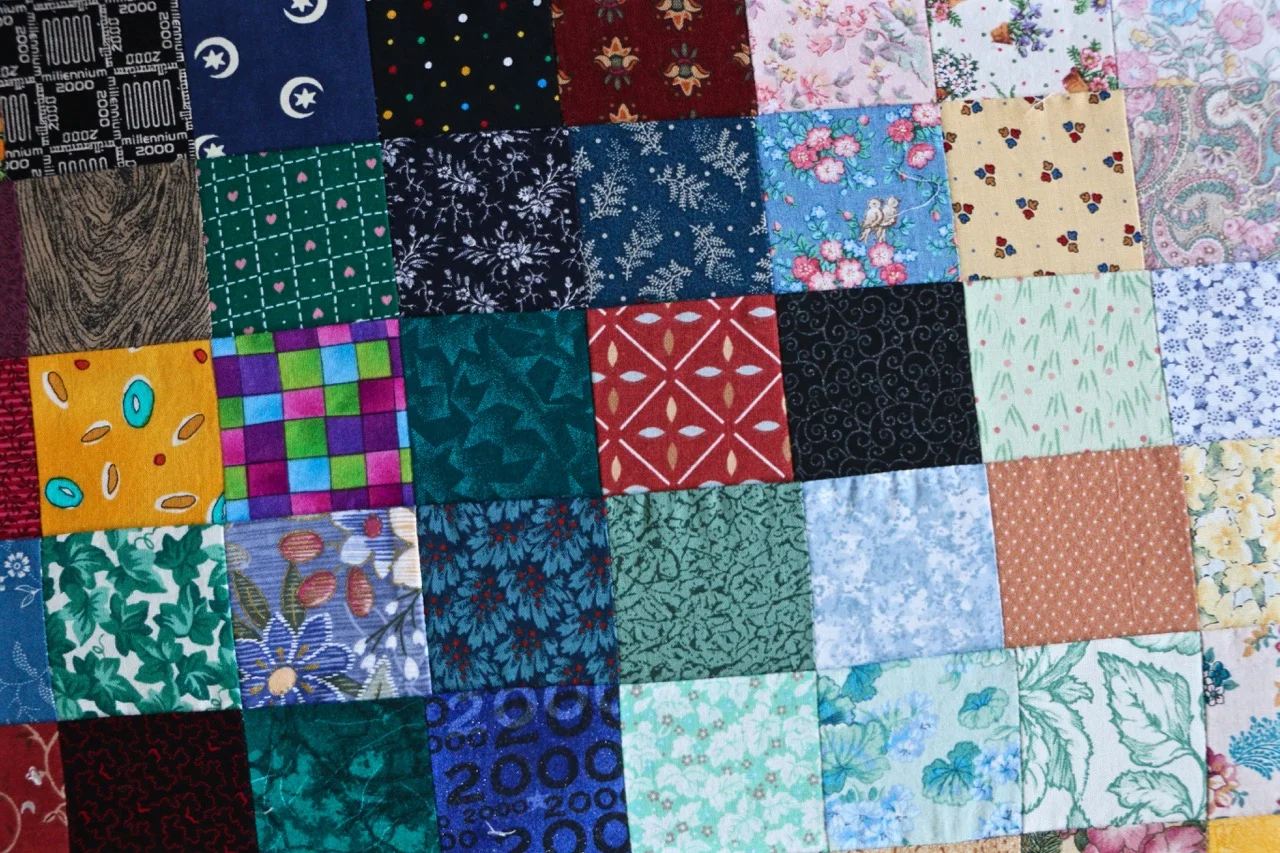
Okay, so it isn't done yet. Only the top is done. But can we take a moment to celebrate sewing together 2000 little squares of fabric? I realize only quilters would celebrate that, but still. It comes in at 80'' by 100''. I only would have started it 17 years ago, when I participated in a swap prior to the Y2K New Year.

Can we also take a moment to celebrate 1990s fabric?

1990s fabric detail

The prints were so little, the colours mostly drab, and calico still reigned supreme. In looking at these fabrics again you can see why Amy Butler and Heather Ross were so revolutionary when they burst on the scene more than a decade ago! Changing the scale of the prints was huge, not just a big deal. A large scale print in the late 1990s would have meant a motif an inch or maybe 2 inches big. Then Amy's work came in at triple and quadruple that. And now, even to someone who considers themself a traditional quilter, these old prints are probably tiny. The market just moved to bigger designs, period.

Of course, there were and are always exceptions to the trends. What were then called Japanese inspired prints always seemed to have larger motifs with negative space in between. Saturated colours in fabric existed then, although they were most likely seen in novelty (kids) or geometrics prints. We still see small florals now. Text prints existed then as they do now, although not with the selection we have. Yellow is still a tough colour to find because, inexplicably, people find it hard to use.

The biggest difference in the 17-20 years since the fabrics in this quilt were made is in the general colour story. There is a lot of forest green, brown reds, and dull blues here. In a quilt store in the 1990s the fabrics with pure hues would have stuck out like a sore thumb. Great if you are drawn to them, not so great for store owners who may have found them a hard sell. Now, in some quilt stores you would be hard pressed to find a forest green, brown red, or dull blue. The fabrics for landscape quilts, yes. Or Civil War reproductions, sure. If the store carries that broader variety of prints. I'm generalizing here, of course, because you still see those colours, but you probably get what I'm saying.

I think it would be fascinating to see a version of a Y2K quilt made with today's fabrics. Not even an intentional effort to only put modern fabric in. No, just someone cutting into their stash to see the difference. That someone, however, will not be me. Once is enough. Did I mention that this quilt top has 2000 squares?

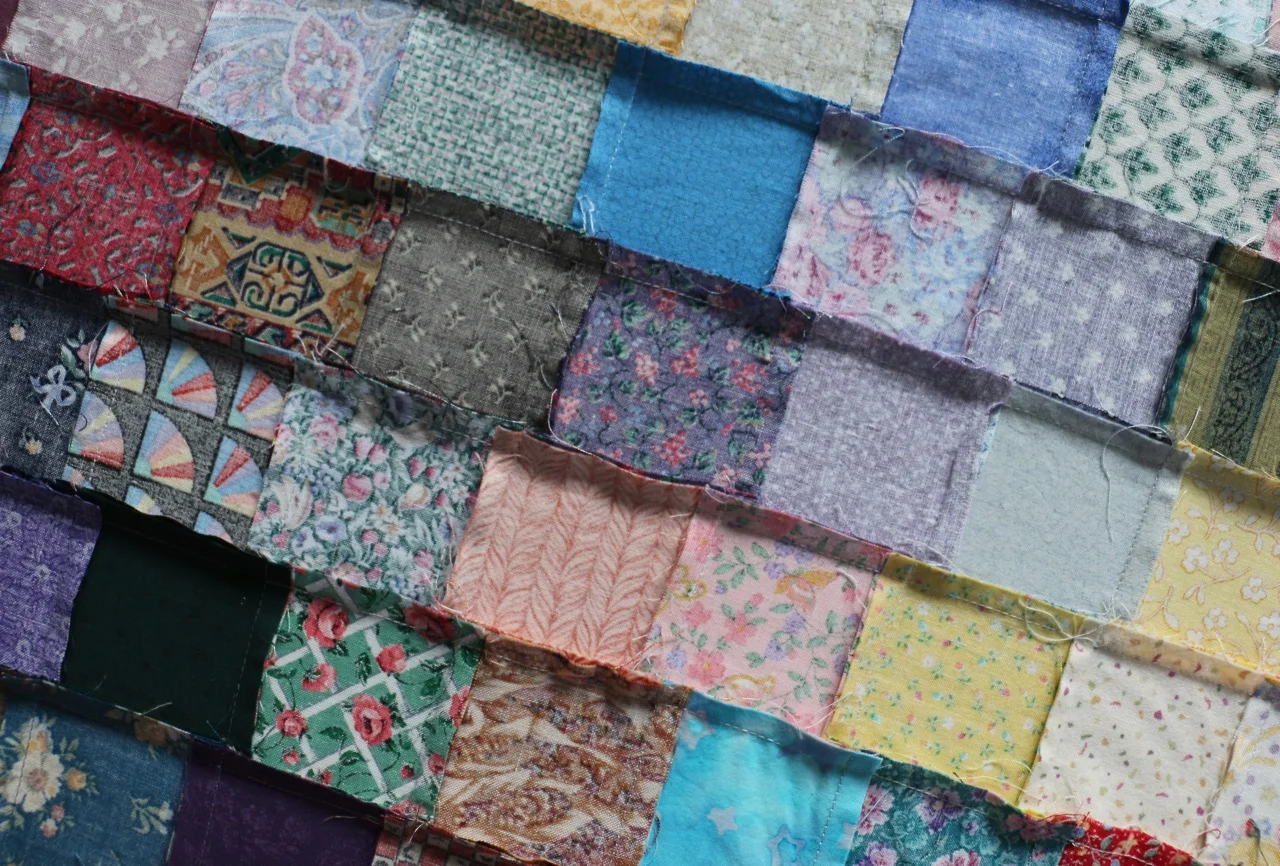
Y2K Quilt Top  Back of the Quilt