"creativity"

April Morning Make 2022

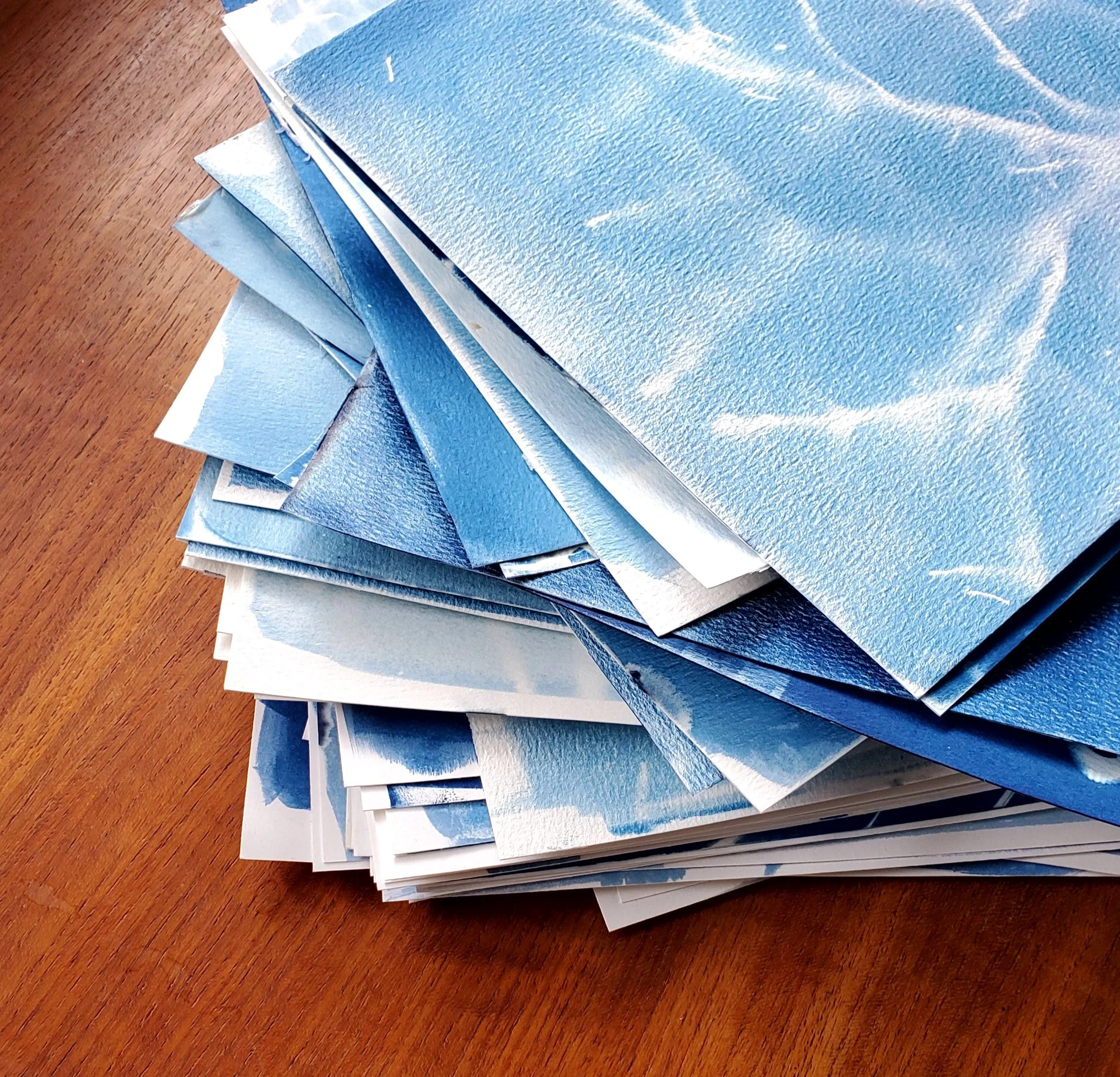
Stack of papers coloured blue with cyanotype

April was an exploration of light, more than anything. Indeed, I’ve never paid this much attention to light, shadow, and sunshine before. It was an excellent practice in paying attention, in noticing.

Cyanotype is a form of light exposure, like photo developing. You use chemicals on paper, fabric, or anything that can be coated (I saw someone do rocks and I want to try that!) It requires the interaction of the two chemicals: potassium ferricyanide and ferric ammonium citrate. You only really need to know that you need equal parts of each and to mix them together right before using. I picked up the set from my local art supply store.
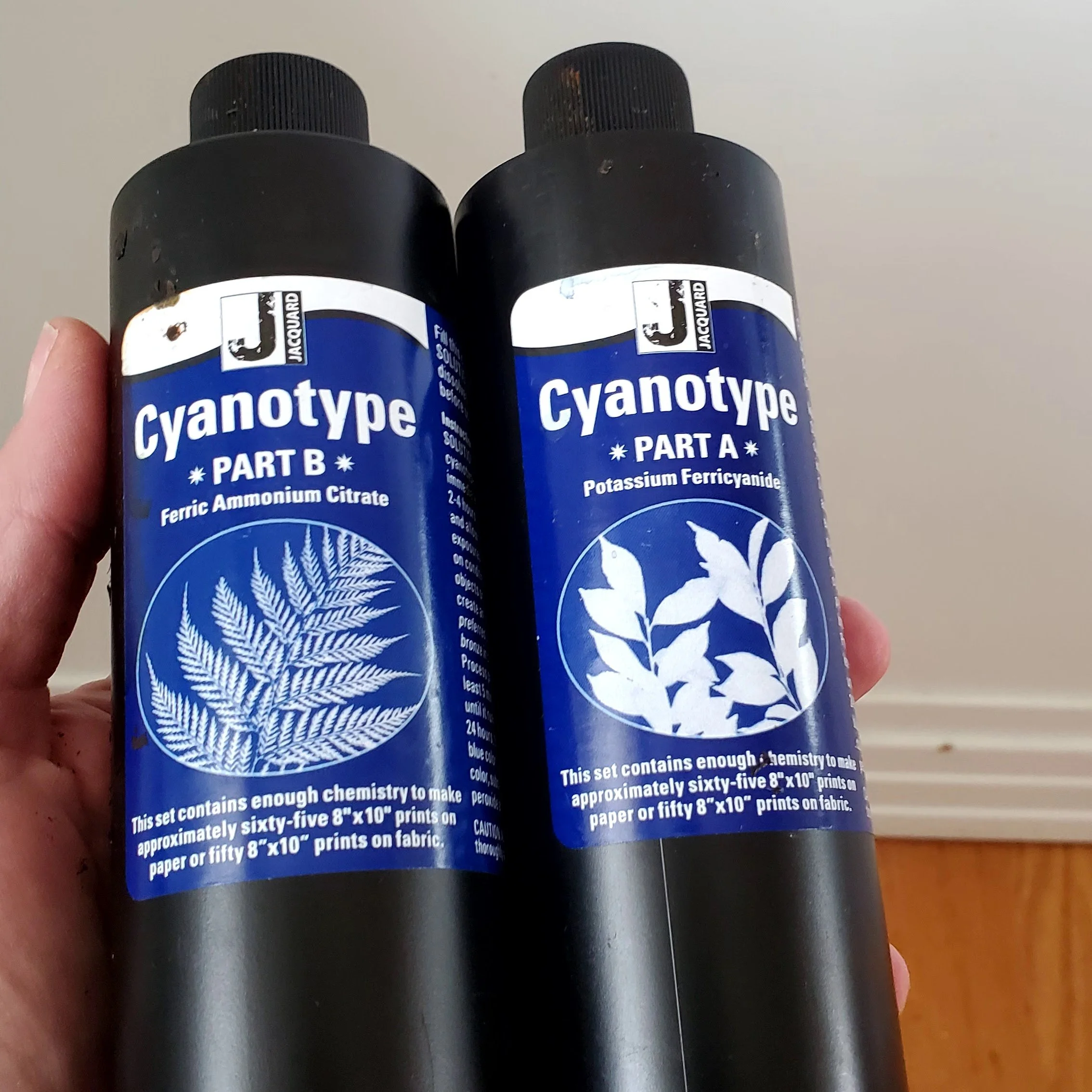
Bottles of chemicals for making cyanotype prints

For the first half of the month I mixed the chemicals at night, painted the paper, and let them dry in a dark bathroom. Light exposure starts the process of creating the print, hence the windowless bathroom. For the second half of the month I played with wet exposure, meaning you paint the paper with the just mixed chemicals and go straight to the creation of the print. In the end, I couldn’t really tell the difference from the results.

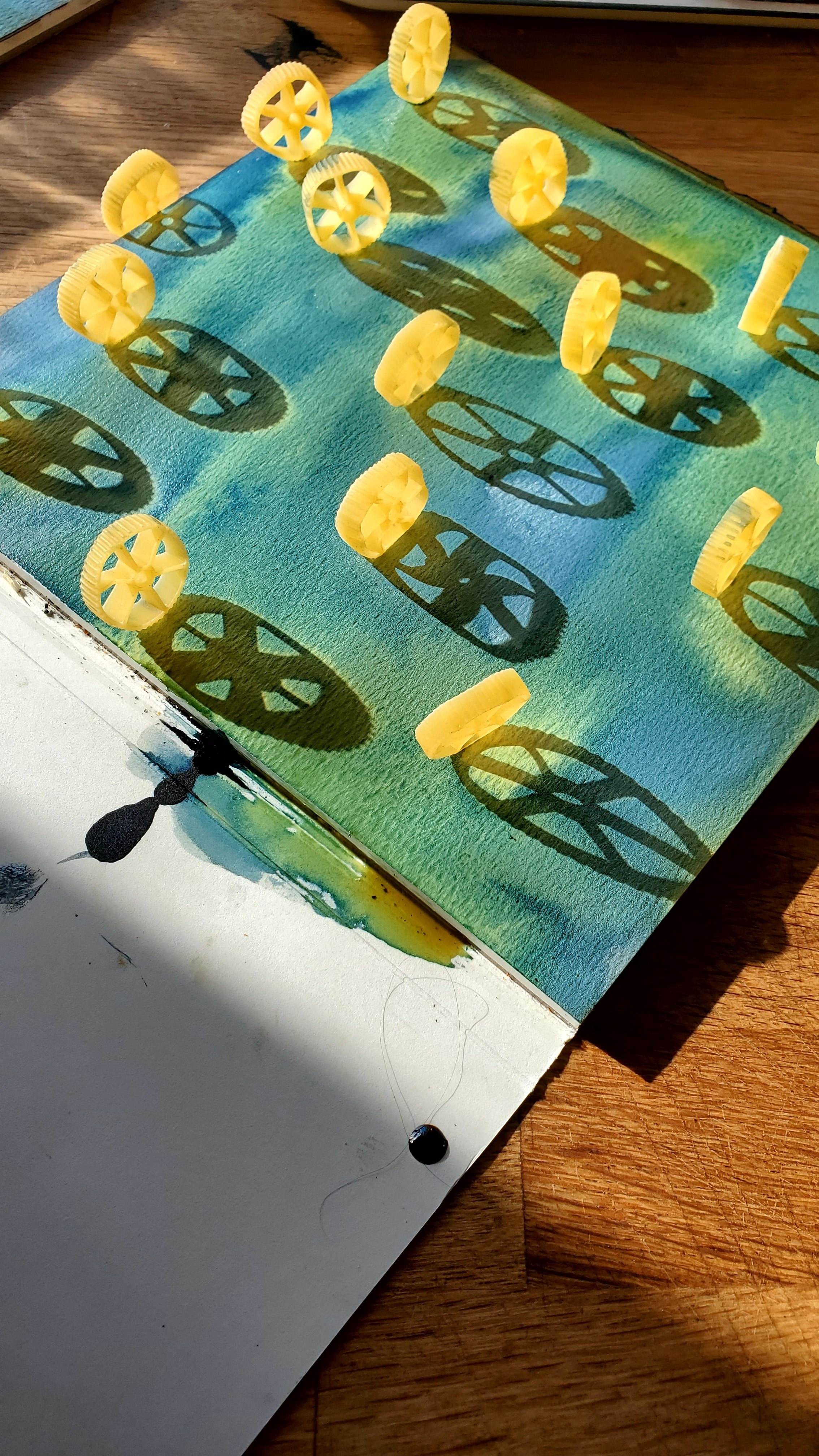
To create the print you place an object on the treated paper and let light do its thing. Where the object is placed and in its shadow the outline remains while the rest of the paper gets exposed. Essentially, you are creating a negative image.
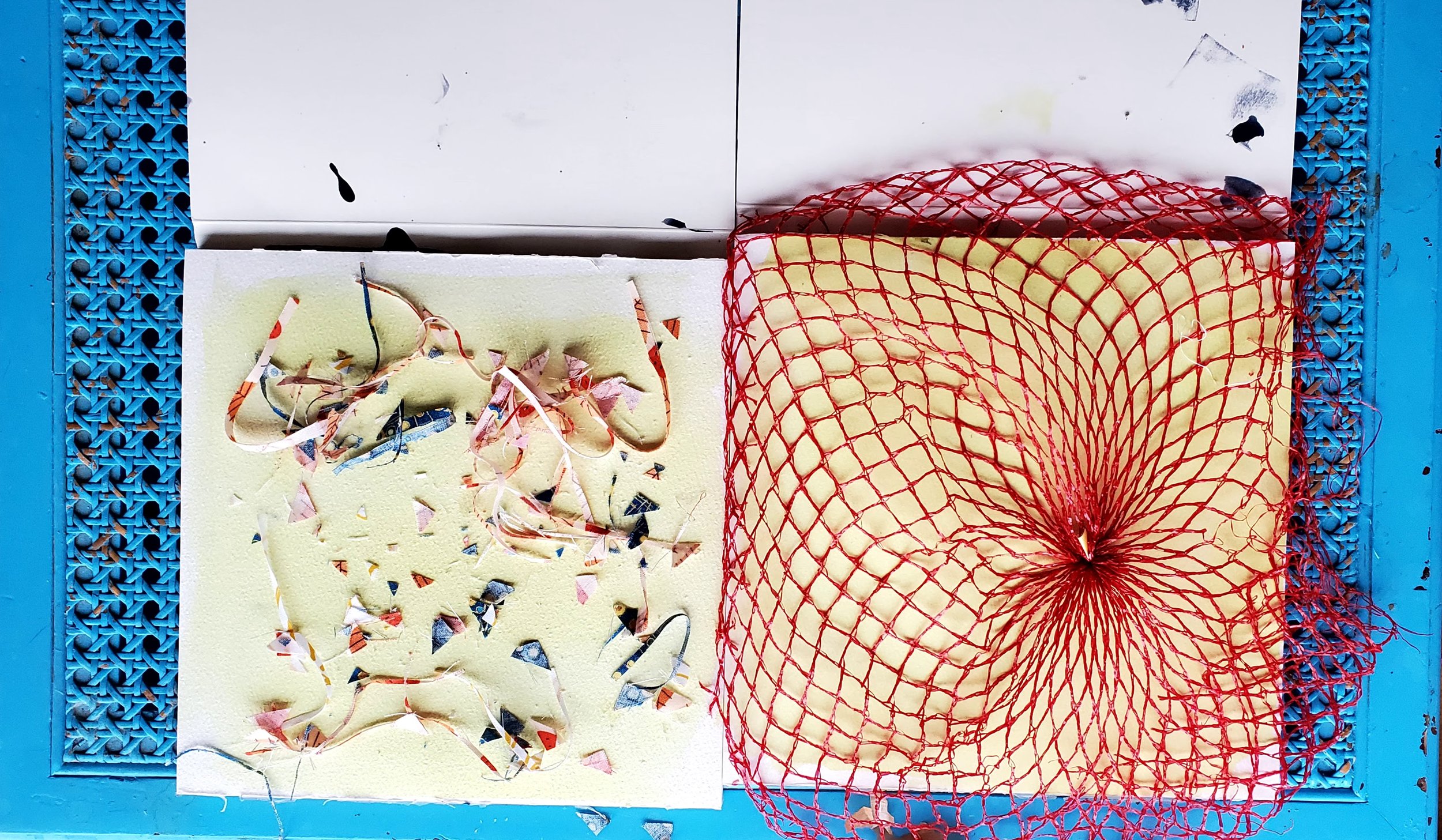
The beginnings of a cyanotype print with fabric trimmings and a mesh onion bag

Where things get both exciting and frustrating is with the shadows. Not that sunny? An object with diffuse edges? You get a ‘blurrier’ print. Very sunny? You get shadows. Depending on the time of day and the level of sunniness, you can get very sharp images or long shadows. I found the exploration of these differences fascinating and learned to exploit them to create different things. Seeing as this is morning make and it was April in a northern location, I had a lot of shadows to play with and sometimes not a lot of light. It means I will probably play a bit more in the peak of a summer’s day.
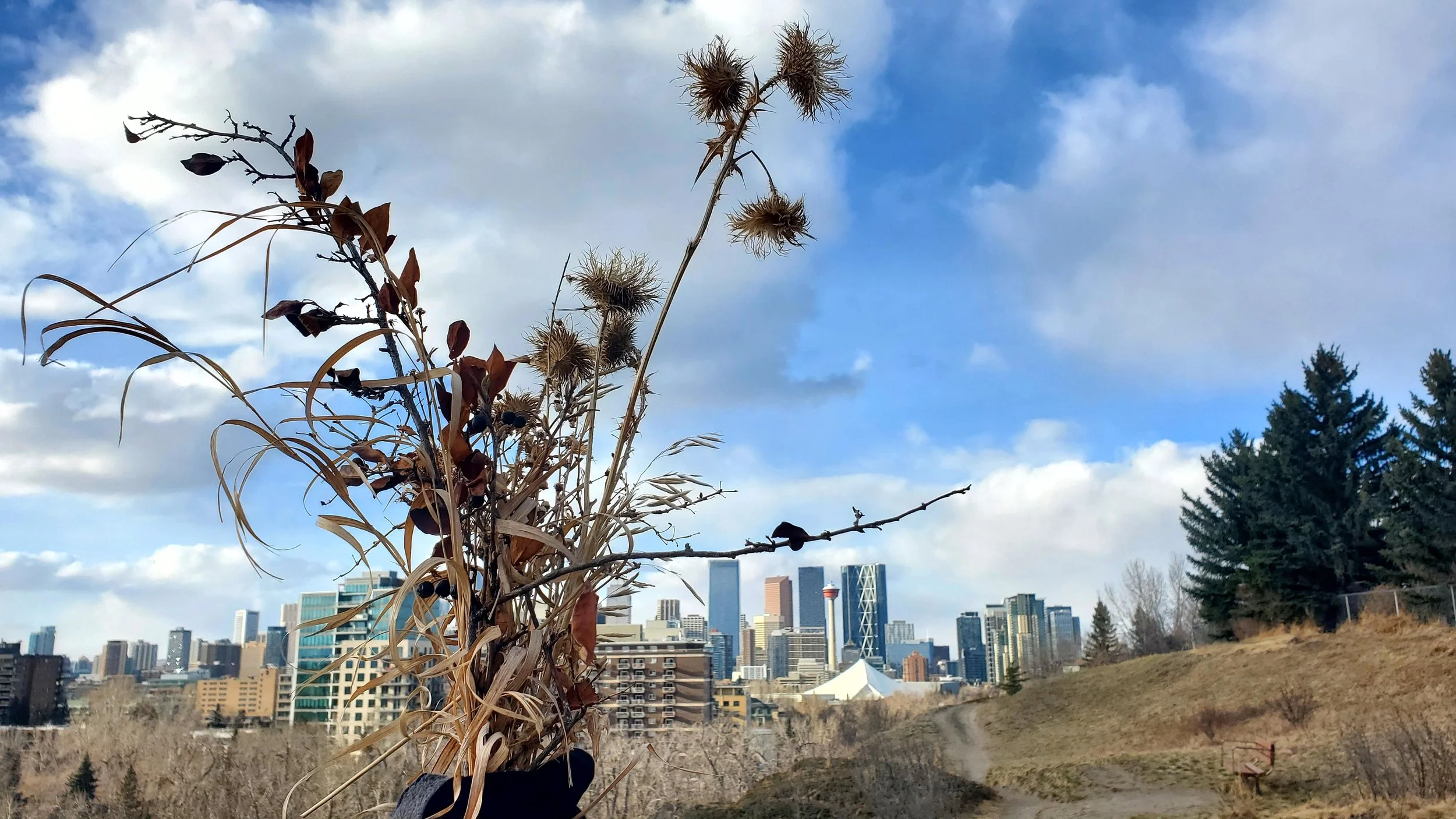
Bouquet of dried plants and grasses again the Calgary skyline

The other act of noticing this month was in looking for things to use to create the print. You see a lot of cyanotype prints exploring shape through living objects like plants and flowers. It was April in Calgary, not a lot of greenery! But weeds, grasses, and last year’s living plants provided fascinating textures to use. Going for walks I found myself nothing plants and sticks in new ways, or even discovering new to me plants. I never picked anything living and cut dead things, leaving roots in tact in case it was a perennial. I also explored the house for objects, using kitchen tools, jewelry, games, even garbage. If it can create a shadow it can create an exposure.

Four different cyanotype prints created from natural and household objects

Each day I made 2 prints, so ended up the month with a lot of prints, some definitely better than others. Here are four of my favourites. From top left, in clockwise order. A necklace from Elinor Stenroos on dry. Shadows from slurpee cup and jar lids on dry. Cheerios on wet. Thistle on wet.

Some days I got the real dark, indigo blue colour typically associated with cyanotype, others it was quite pale. To be honest, I never really figured out what created the difference. it always felt like I was putting the same amount of the chemicals on the sheet. I suspect my proportions of the two agents varied, but I don’t really know. Length of exposure varied too, depending on the light conditions that day. I don’t think that effects the colour though, as I exposed almost all to the same colour before washing. (The chemicals look pale green when they go on then change colour as the exposure happens, usually showing done when a bronze or dark green.)

Yes, you can do this on fabric and that probably made a lot of sense for me, a quilter. However, I wanted to try the paper and besides, it’s not like I needed more fabric! That being said, I also don’t need 60, mostly mediocre, cyanotype prints. So I got a notion for a secondary art project.
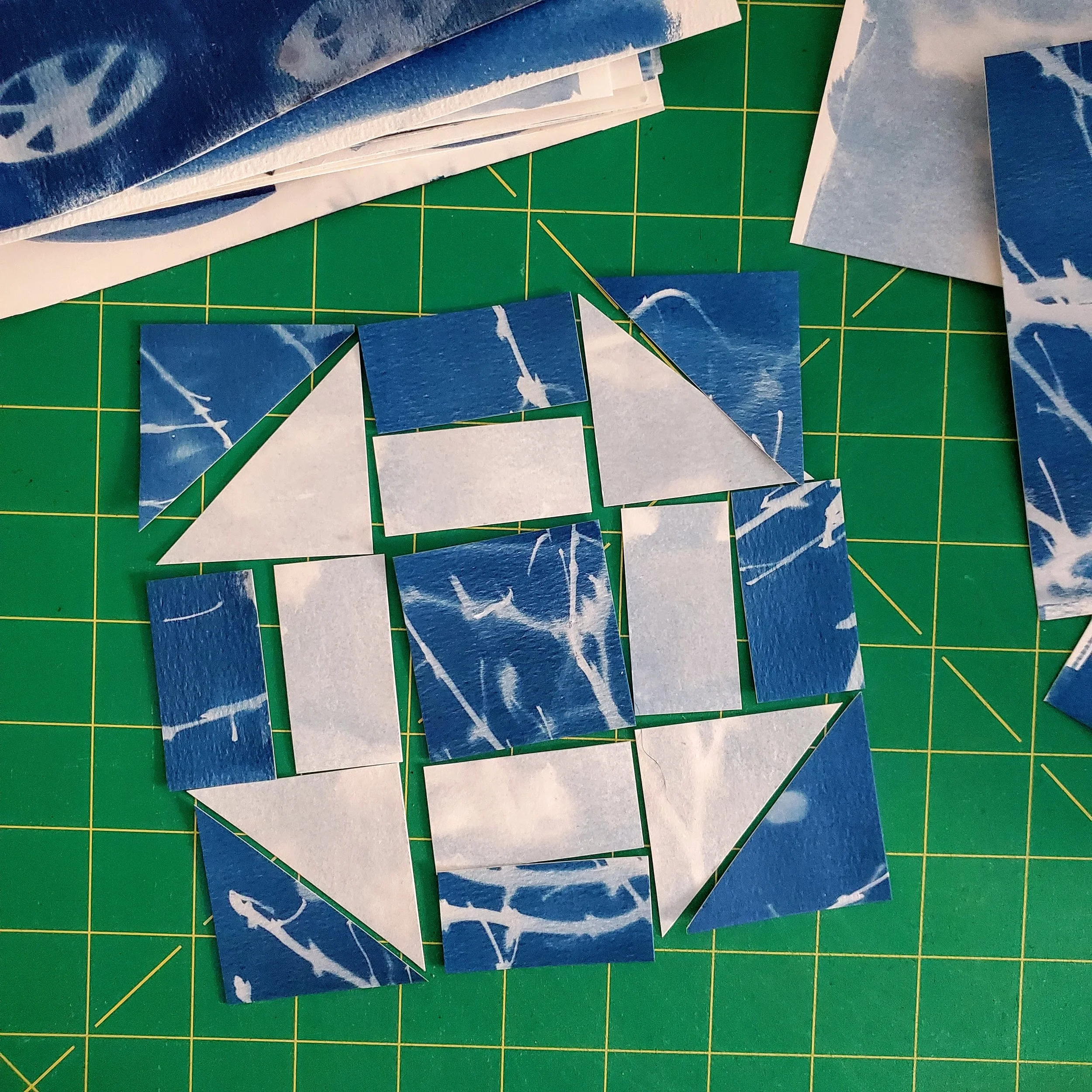
Cyanotype prints cut apart and arranged in a churn dash quilt block

I need to test my assembly idea for these but if it works, I think it could be pretty cool. And it just might get by the ‘no quilts on the wall’ rule in the house!

At the end of the month I have to say this was a lovely exploration. I admit to being intimidated by the chemicals and the idea of it at the beginning. What foolishness! It is actually really easy, I felt totally safe mixing the agents together, and it was an adventure to see what could happen. Sure, things didn’t always work and I’m still on the low end of the learning curve but it was a low stress experiment. The anticipation each morning of what could happen was a great way to start the day. Pure creative optimism.

PS. I saved a highlight of the process - start to finish - on Instagram.
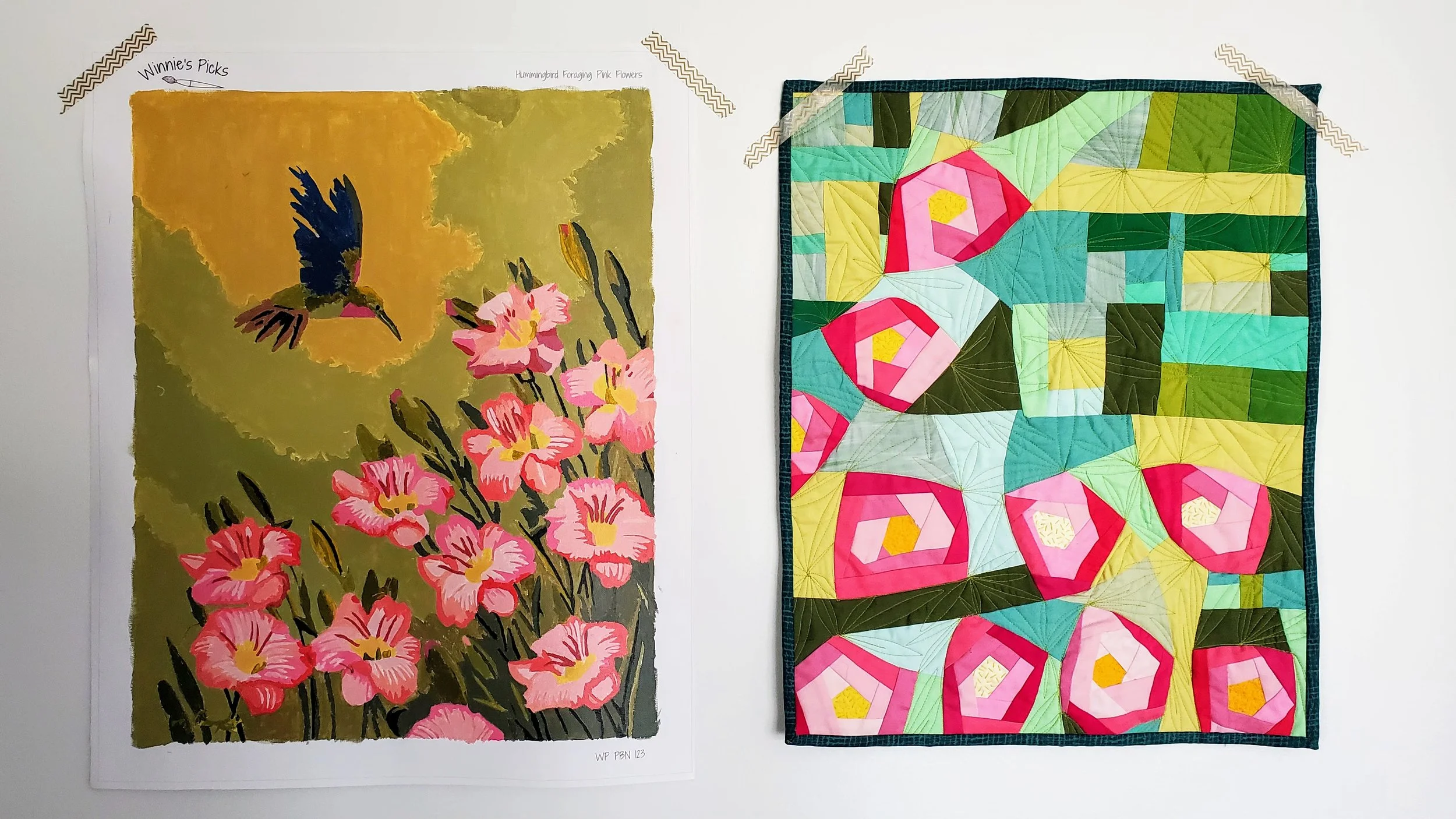
Fleur - Paint by Numbers Inspired Quilt

Left side is a paint by numbers of a hummingbird over flowers. One the right is an improvised quilt based on the hummingbird picture.

Fluer

16” x 20”

A sweet mini inspired by that hummingbird paint by numbers. It is clear I am much better at quilts than paint by numbers!


In June of 2021 my kids bought me the paint by numbers for a new Morning Make activity. Each day I patiently worked my way through the numbers. It was the right kind of meditative play for me for Morning Make, but when I finished halfway through the month I declined the offer to start a new one. Just not my thing. Then a friend suggested I make a quilt inspired by the painting.

Once finished, it, like many other quilt tops of mine, sat. And sat. A few weeks ago I was in the mood to play with some free motion quilting. Having a mini on hand was fortuitous. It’s an easy baste and in 20 minutes I was stitching. Once I completed the leaves to the flowers (in a perfect olive green from Aurifil) I decided the hand stitch in the centers of the flowers and leave the rest unquilted. Simple, yet graphic.

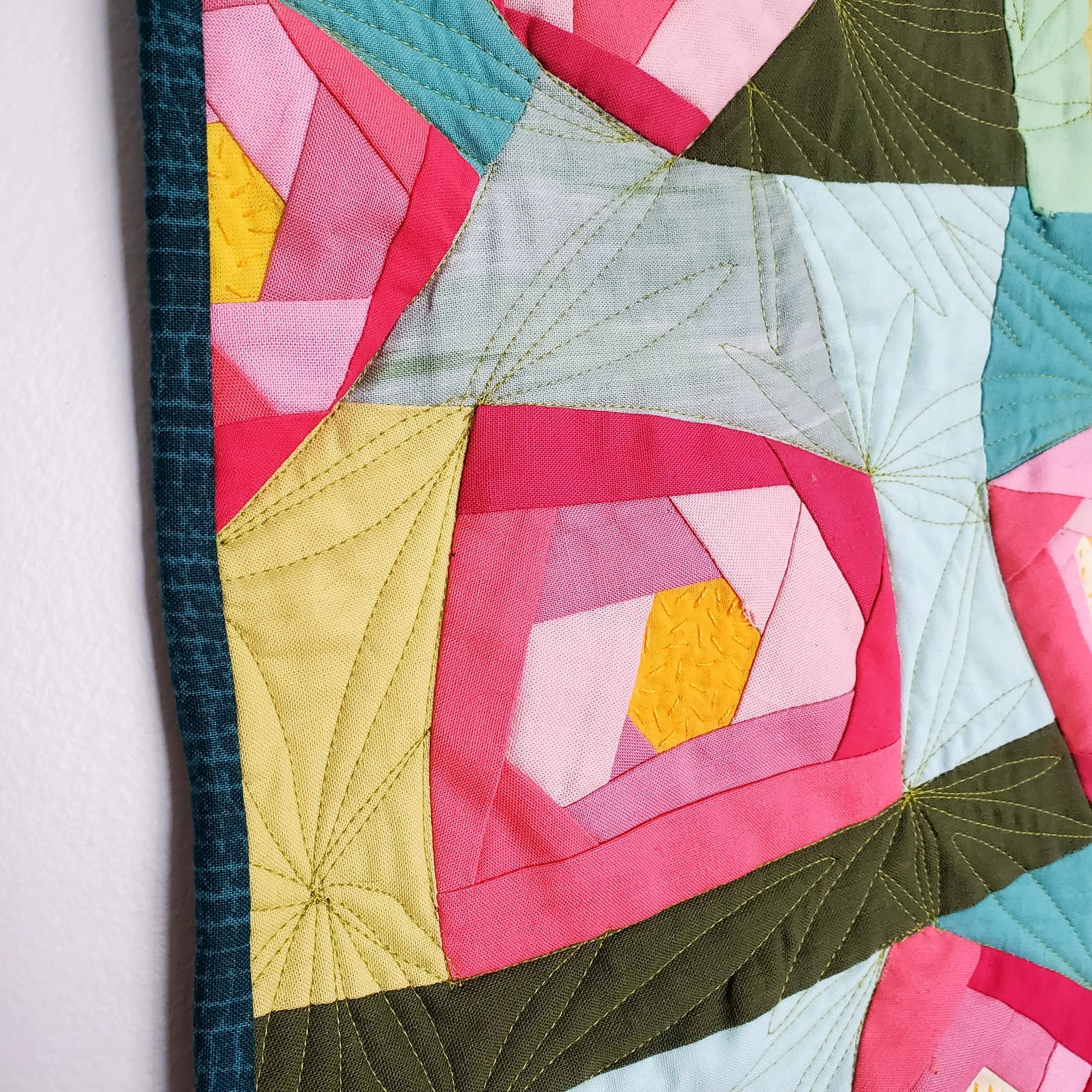
Details of the quilting. Free motion leaves around improv pieced flowers with seed stitch yellow centers

So now they are both done. Will they hang together? Probably not. For one, I did a pretty crap job on the painting. And two, we have a no quilts on the wall rule. That’s okay, I’ll just bring her out every now and then when I need a little pick me up.

Quilters Stand for Ukraine - Resources

Like always, I and many other quilters are using their fabric to process emotions. We are in scary, depressing times right now with the Russian attack on Ukraine. Like many others I can only watch in fear and dismay. Like many other Ukrainian Canadians I can only help from the sidelines.

Whether it is donations from the sales of patterns, exclusive and free patterns, shopping on Etsy for downloads from Ukrainian creators, or making ourselves, there are many projects and initiatives within the craft community for showing and sharing support for our Ukrainian brothers and sisters. Here is a list of what I know of so far. (Feel free to email me at cheryl@cherylarkison.com if you know of others and I will update the list.)

Peace paper pieced block by Happy Sew Lucky (free download)

Dove Mini Quilt Pattern by Tamara Kate Designs (all sale proceeds to Ukraine relief orgs via Canadian Red Cross)

Quilters Stand for Ukrainian quilt block by Pat Sloan (donate and free download)

Sunflower block by Quiet Play (free download with donation request)

Rise of Freedom by Sashas Quilt (Paper pieced pattern download from a Ukrainian quilter)

My own sunflowers above are a version of the simple improv tutorial provided by Anne Larsen. My plan is to make a field of sunflowers. One of our employees is from Kharkiv herself and only today we learned that her mother and in-laws are finally safe in Germany. They will be coming to Canada as soon as they can and it might be nice to cover them with a small taste of home when they arrive. Sometimes you can’t help every person so you pick someone you can directly impact and do the work. We are doing what we can to support our employee and her family because we can see this direct impact. Being a quilter, you know there will be a quilt or two.

Rest

Truth be told, I’m not very good at rest. I want to be, I try to be, but it’s hard. I’ve come to realize that this is because I would generally consider rest as sitting on my butt and doing nothing. Stop me if this sounds familiar though, you can’t sit and do nothing until everything is done. Everything is never done, right? Which means you never rest.

We thus need a new definition of rest.

At one time in life (when I was younger) I was a competitive athlete. Back then rest meant two things. One, just like above, rest was simply not doing the training. Two, within a workout there was active rest. So not the hard training pieces, but the easy strokes in between the hard sets. As a professional quilter I see the benefit of the latter. As a parent I realize the former is impossible. So that has led to me understanding that I need two unique forms of rest.

Active Rest

When you are working on deadlines and contracts quilting can feel like a chore, let alone actual work for some. Quite often the quilting becomes hard and full of drudgery. What once gave us joy and energy drags us down. It’s one thing to be pushing to meet a deadline like a wedding or show entry. This is why I am a big fan of Active Rest.

This is about, in many respects, mindless sewing and play. It’s the sewing that doesn’t challenge you or push your creativity. It might be creative action though. So maybe sewing snippets of fabrics in pairs, making HSTs, aligning strips, binding a quilt, stippling a quilt. The kind of sewing that allows you to catch your breath after a hard run. That’s why it is called Active Rest. You are still doing something but giving yourself the opportunity to slow down, gather thoughts, and be mindless for a little while. Because creativity begets creativity your juices will eventually start flowing again and you will be ready for the next challenge.

Escape to Rest

While running away to the beach or the mountains is many, many people’s idea of escape (myself included) we can’t do it that often. That’s why we need to find daily or weekly moments of escape. For me, this often includes long walks in the forests not far from home, a ski trip for the day, or maybe camping in the summer. It might be a hot bath, curling up with a great book, or binging a new show. My best advice when on a physical escape like this is to lean in to it. So no stitching while watching TV, no podcasts on your walk, leaving the sewing at home on a trip out of town. Let escape truly be a mental break.

Don’t want to give up your creative pursuits, even for a moment? Then switch it up! Escape to Rest also means exploring other creative interests. Trying crochet, taking a watercolour class, learning embroidery, even reading a fashion magazine. Your muscles and brain are still working, but in a different way. This alternate firing of brain cells gives your quilting brain a rest, your conscious mind an escape, but you are still pursuing creativity. It can be both relaxing and liberating.

In truth, this is what Morning Make has been for me over the last two years, on the months I am not sewing, that is. Trying weaving and embroidery and painting and poetry is an Escape to Rest for my creative brain.

The last few years have been rough for everyone. Indeed, rough is an understatement. While there were long periods of time where we were home, languishing, we weren’t still resting. Doomscrolling, cleaning, stressing, eating, teaching our kids, working on the dining room table - all of it added up to HARD WORK. Watching Tiger King at the end of the day just didn’t quite give us our energy back.

Resting is not easy.. I don’t want to be roped in to the mess of toxic positivity either when I say rest is important. Rest is a choice. It’s taken me a long, long time to see that and thus make it priority. I thought not having to drive my kids all evening was going to be the rest I needed. Nope, not even close. I puttered and wandered and zoned out but I did not rest. Since choosing to make rest an important part of my life I can feel myself catch my breath a little quicker, like I am getting in shape. The more I rest the better I feel when I am doing the hard stuff.

Full confession: I just spent the weekend in the mountains with my husband, just my husband. I brought crafty things to do and read but, in the end, read a thriller, took 5 baths in 48 hours, ate room service, and walked in a snowy forest. Now that’s an Escape to Rest! Then I came home ready to sew!