"quilts"

A Blue Quilt for The Blue Gala

Blue Quilt Hattori Wiliamson Charity Quilt

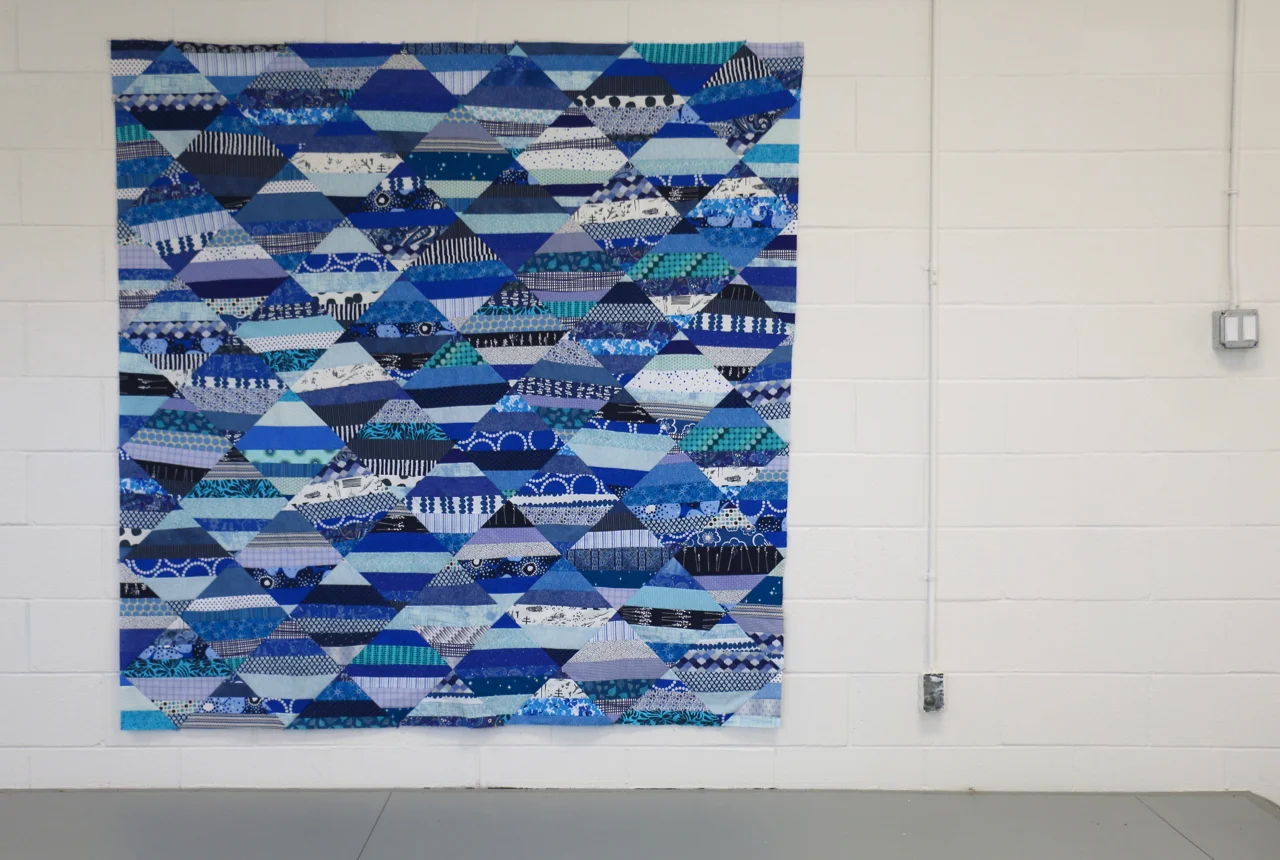
From one demo block in a quilt class to this finished top. Oops, I did it again.

It truly did start as a demo block in a string piecing class. Then my friends from H/W Ballet asked me if I would donate a quilt to a silent auction for a gala ballet event. Well, of course I would. The event is called the Blue Gala. And wouldn't you know it my sample block was from some blue scraps? Not to mention the event raises fund for Pancreatic Cancer research and guess what stole my father-in-law?

Truly, it was all meant to be.
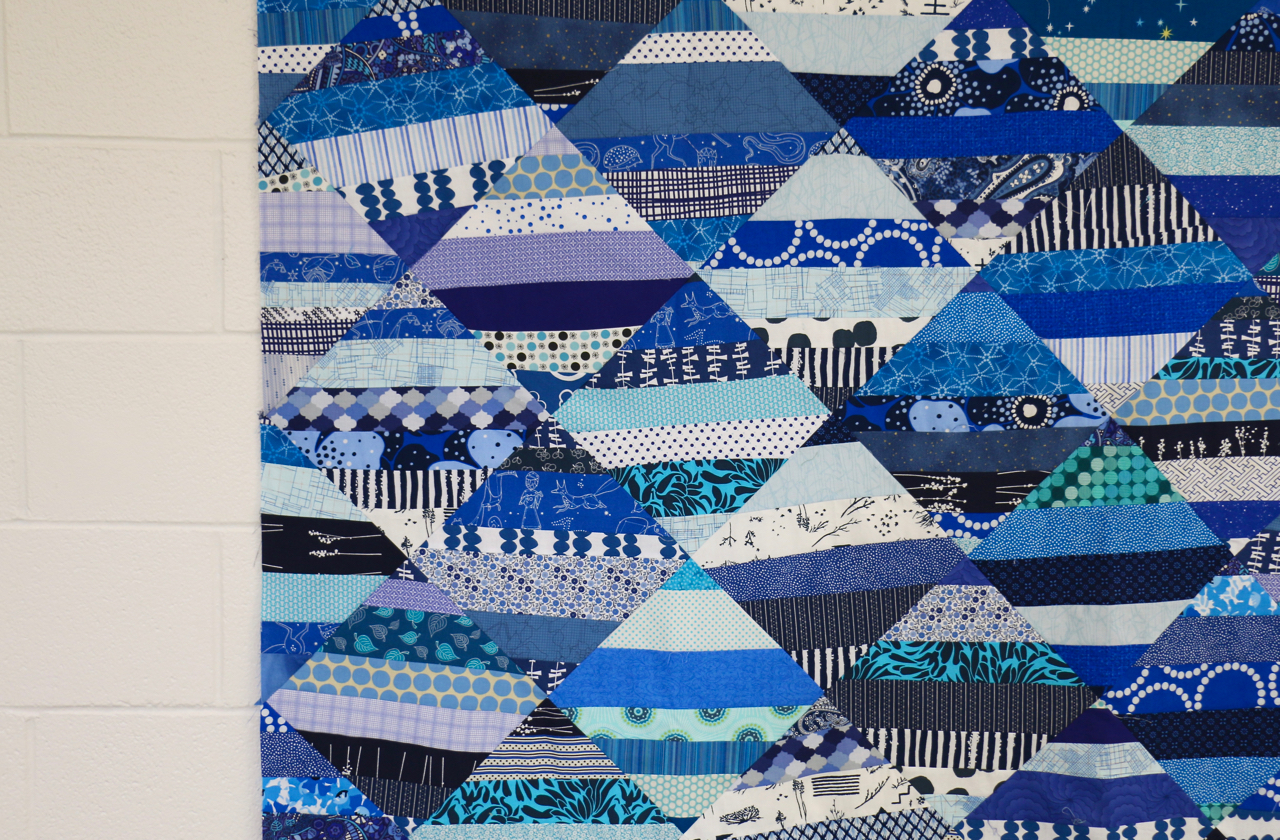
Blue scrap quilt

The quilt came together in the morning hours. I could sew together strips and square up about 4-6 blocks in about 20 minutes of Morning Make. Every day I made a few more blocks and threw them up on the design wall. A few weeks ago I added a short yoga practice to my mornings so I would then stare at the blocks and make rearrangements when I was supposed to be in downward dog.

Now to get this quilted for the early February Gala. Should be plenty of time. Then it will be up for silent auction. Don't hesitate to shoot me a line if you are interested in bidding...
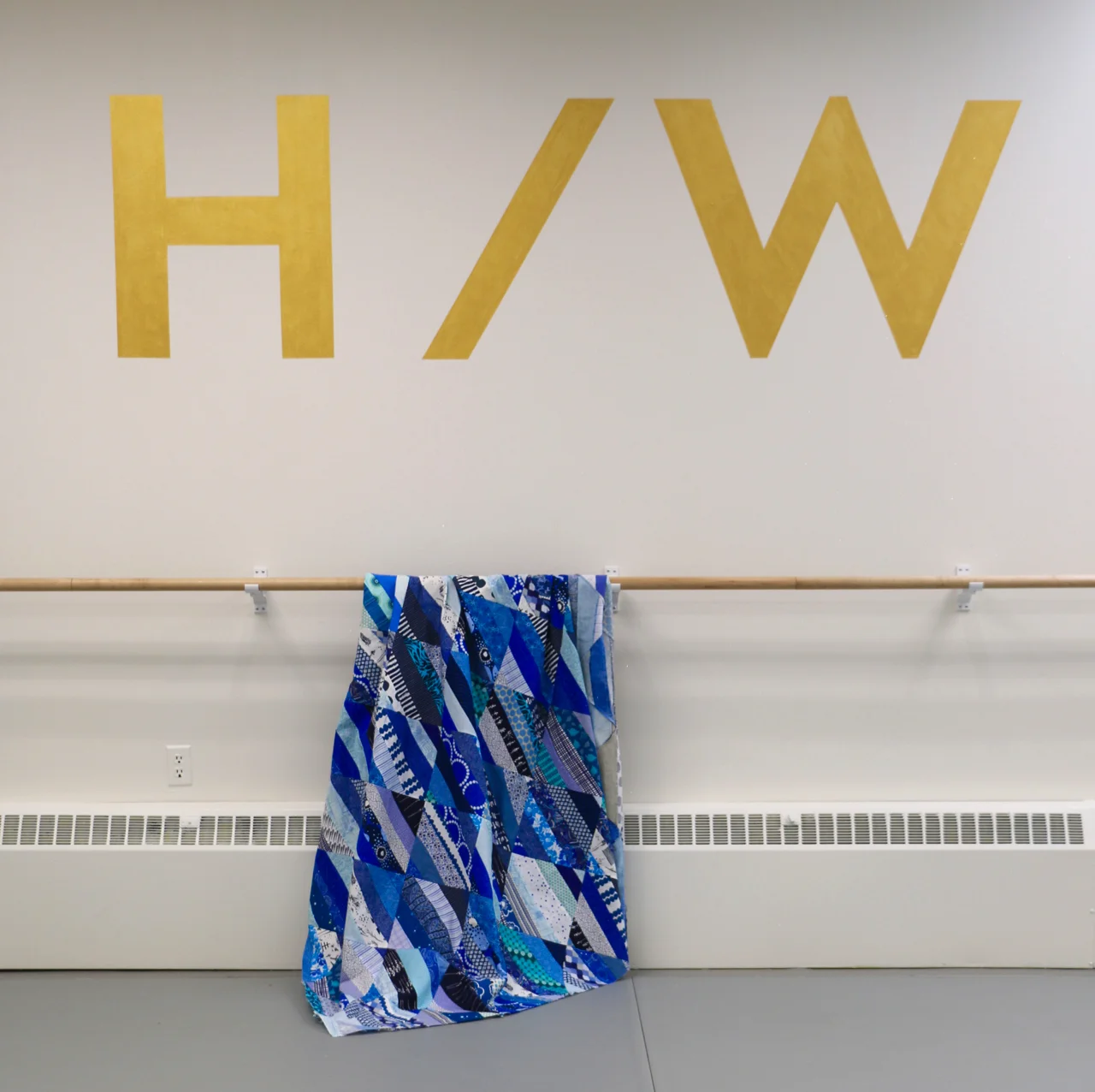
Hattori Williamson Blue Gala Charity Quilt

From 0 to 125 - A Survey of Unfinished Quilts

quilts under construction sep 2017.jpg

Where do you fall when it comes to unfinished quilts? Earlier this year I conducted a survey of readers on the topic. Everything from true confessions on the number of quilts under construction to attitudes towards these projects.  Over 400 people answered the survey and I am finally able to share the results. My own current number sits at 47. It certainly creeped up this year!

What counts as a quilt under construction? I left the definition of unfinished open, by design. For some people a stack of fabric counts as an unfinished quilt, for others it is a quilt top. I let everyone define that personally. 

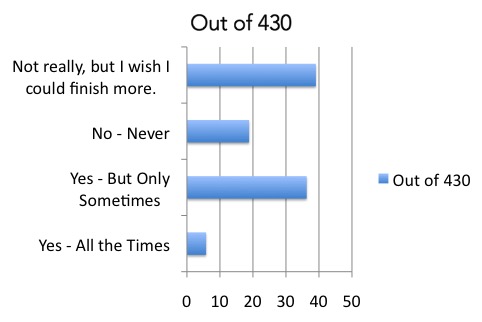
Just how many quilts under construction do you have? A few of you have 0, zero! unfinished quilts. A a few of you have over 100 quilts sitting unfinished. Most of you, however, are in the 10-15 unfinished quilts range. 

What I think is more telling is how people feel about their number. I asked people does this number stress you out?

does this number stress you out?.jpg

Unfortunately, it didn't occur to me to have these questions link so I could figure out the statistical correlation (I am not a survey designer by trade). Same goes for the next question, where I asked people how many is too many?

how many is too many?.jpg

In looking informally through all the responses though, it appears (but is not proven) that those that have a higher number don't seem all that stressed by the number. Nor do they think there is such a thing as too many. I have a theory about that. 

It comes down to perspective. If people view quiltmaking as a means to an end - a process by which we make a product - they get hung up on numbers and checking things off lists. Must finish becomes a mantra because their goal is a finished quilt. But if people view quilting making as an end in and of itself - a process that may or may not result in a product - then the number doesn't really matter.

Of course it should be said that at some point the majority of us do want to finish quilts. We are, ultimately, trying to make quilts here. If the emphasis, however, is on the finished product over the process we might as well go to the mall and buy a factory made piece. 

Back to the survery results.

Let's get practical. I asked where in the process do you generally stop working on a quilt? The question about process was left open ended, so the numbers don't add up to 100%. But the results are still telling. 

Hung up at?.jpg

I know, for me, making a backing and basting are my blockades. Quilts pile up there. It seems I am not alone. Those are tedious tasks, no doubt. 

One question and the most popular answer probably tell the story here. The question was asked, what makes you stop working on a quilt?

Overwhelmingly, the answer was what one respondent referred to as Shiny Object Disorder. Something else becomes more inspiring in that moment. Or we get bored. It's pretty simple. Other answers included uncertainty about quilting plans or skill level. And that ever present need to wash the floors to baste a quilt!

I was able to present these results and my take on them in a lecture at QuiltCon in February. For the rest of you who weren't there I am happy to both share the results here and my full take on them in the latest issue of Modern Quilts Unlimited. In the article I defend all these unfinished quilts as markers of creativity. If we take on the Five Ps of quilt creativity we can all see it this way.

  • Perception - how you view your quiltmaking in general makes a huge difference in how you view unfinished quilts, your skill level, and creativity
  • Planning - approaching quiltmaking willy nilly is fine for some, but most of us require a more thoughtful approach to a project and practical considerations of space, time, and money
  • Process - there should be as much joy for you in the process as the product
  • Practicality - how we manage the unfinished quilts in our space and minds
  • Play - bringing that spirit of playful joy to our quiltmaking

Long time readers will recognize these themes from posts. After nearly 20 years a quilter I've learned a few things, and I don't just mean hand applique. When we start our quiltmaking we almost always all start with products in mind. Some of us stay there and some embrace process more. Neither is more right than the other. When it comes to quilts under construction, however, I do need to defend every single one you have as a mark of creative action. Even if it's been years since you touched that project it does not represent a failure, it celebrates creativity! Own it.

IMG_0664.jpg

Ellipsis Mini Quilt - Tag Fabric Kit Possibilities

Tag Fabric Cheryl Arkison Ellipsis Quilt

Ellipsis

18'' x 22''

Look, a mini quilt! Yes, I made a mini quilt. It isn't often.

Even better, I made a pattern for this mini quilt. You can get it as a kit too.

When I was designing the Tag fabric collection of course I was also designing quilts to use the fabric. It only made sense that one of the quilts would be rooted in writing. I chose my favourite, and too often used, punctuation mark. By that, I mean I use it too often. The ellipsis says so much, without having to say anything.

And I can't be the only one that says "dun dun duuun" in my head when reading it. Okay, maybe I am.

The ellipsis implies suspense, but does so in a lazy way. It tells the reader there is more without saying anything. It can be overused in writing, especially in my own text conversations. Despite it's laziness I still love it.

Ellipsis Quilt Tag Fabric Cheryl Arkison Connecting Threads

The mini itself is quite simple. Some of my favourite prints from Tag for the applique circles. Colours to minic the intention of ruled paper. Easily whipped up for you, your best student, youradmired writer.

Connecting Threads sells a complete kit to make this mini. (It's currently on sale too!)

I'm looking forward to seeing what you make with your own ellipsis. What story do you have to tell? What mysteries will you tease? Oh, the possibilities...

Lilla Quilt - a Testing Version Comes to Life

Lilla Quilt Improv Quilt Pattern

Testing, Testing

45'' x 45''

About 18 months ago I started working with Lotta Jansdotter on the Lilla quilt pattern. We wanted to time it so a pattern came out when her Lilla fabric line was launching. You can read more about the process here. Before I made anything with Lotta's fabric though I needed to test out the block designs and instructions.

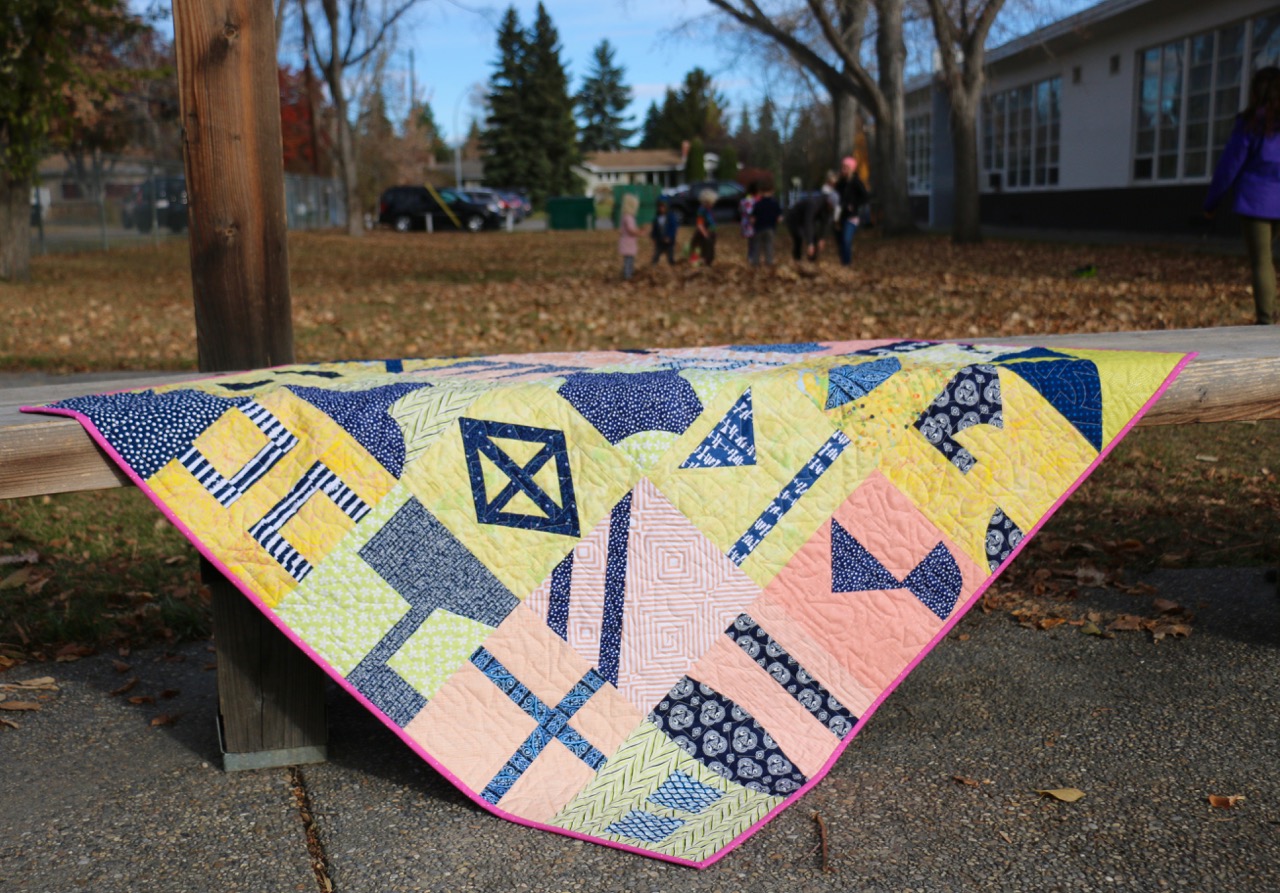
How many of you have stacks of selected fabrics? Colour inspiration hits and you pull fabrics. Then the piles sit there until time or secondary inspiration suddenly appears. Well, when I needed to test the blocks I pulled one of those stacks at random. This particular one was chartreuse and navy, inspired by an outfit Lady Edith was wearing on Downton Abbey once. But as I made more blocks the chartreuse collection of fabric was clearly not going to be enough so I picked peach to play along.

As we tested I had to take pictures in greyscale so colour did not cloud our judgement. Always a useful step, no matter the project.  Once we were happy with all the blocks - some got swapped out at this point, I think I designed about 30 in total - I went straight to making them in Lotta's fabric. And the test blocks were set aside.

Improvisational quilt pattern Lilla Quilt

A few months ago I remembered the blocks and decided to put them all together. More accurately, I found the pile of blocks under a bunch of other stuff and suddenly remembered that they could be a quilt.

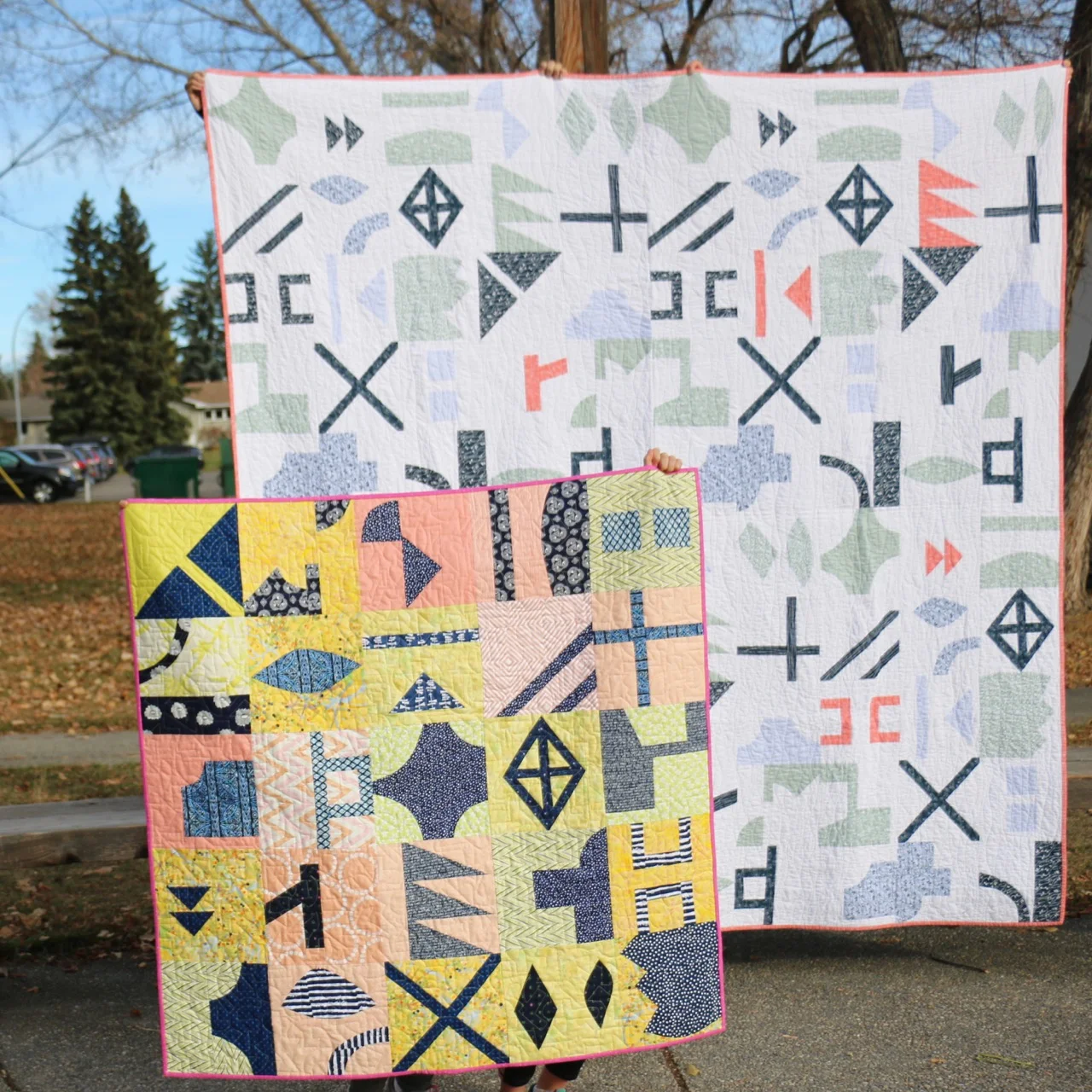
You see, the Lilla quilt pattern provides 25 different block patterns. The cover quilt on the pattern uses all 25 four times over. My version here uses each one once only. Queen size versus baby. Of course, you could only use a handful of the patterns instead of all of them too.

Then the quilt sat, basted, for a couple of months. I started the quilting, but it wasn't quite right. Neither was my machine. So I ripped and repaired the machine. Then, two weeks ago, I was looking at a photo of Lotta's original paper cuts that started us down this design path. Ah ha!! Quilting inspiration. A couple of Morning Make sessions later and the quilting was done.

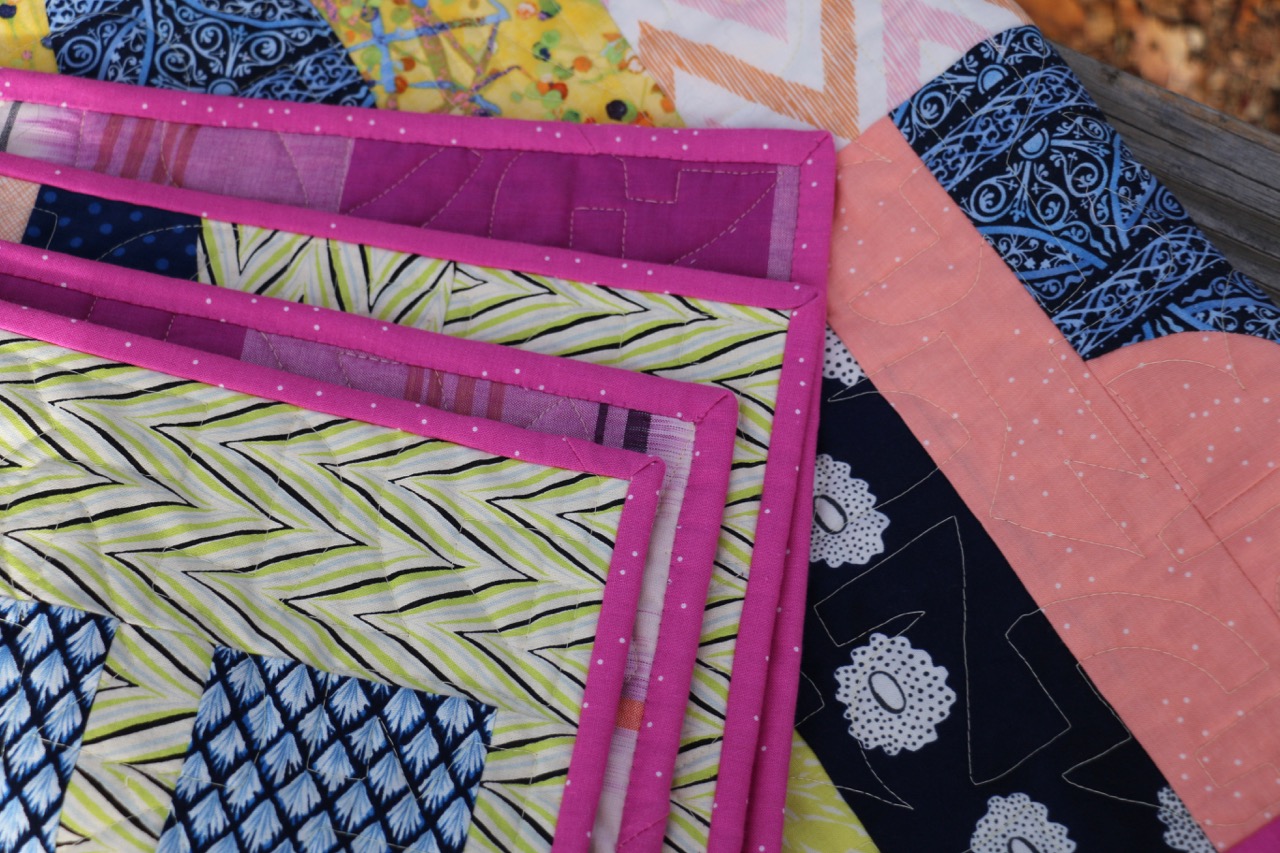
The binding is this great Cotton and Steel. It happened to be sitting in a pile of fabric for another project, but it was too perfect here. And it matches the back perfectly, a piece of Anna Maria Horner's Loominous fabric. 

Cotton and Steel Lotta Jansdotter

In all my years quilting I will fully admit to having a hard time following patterns. But once you start writing them you see things differently. Suddenly you get excited at the possibilities. No one says you have to make it exactly the way it was written, or the way the pattern cover shows. I think it is fantastic to see these two quilts side by side, to see the differences. And I made them both.

The Lilla pattern is a mix between improv and precision piecing. It provides guidelines for the improv work and walks you through it. If you are new to improv, this is a great introduction. There is just enough precision piecing to provide order to those who crave that too. Don't like a block design? Don't make it! Love one particular one? Make 30 of them. There is so much freedom of expression in this pattern. 

Loominous fabric Anna Maria Horner

Pattern available wholesale and retail through C&T Publishing.