
"musings"

10 Observations from an Online Quilt Teacher

Are you Zooming?

While I admit that I shunned Zoom, Skype, and most online meeting grounds in the spring and summer - I was just done with being online after schooling with my son and what little work I could get done - I have fully embraced online teaching. In fact, I am relishing the opportunities to be with guilds, stores, and students again. I am also highly respectful of groups choosing to meet this way over putting people at risk.

My corporate background is really coming out now - I can make a killer slide show! So maybe my graduate degree and 10 years in the energy sector weren't all for naught when I became a professional quilter? I do have 10 years of experience as a pro in this quilting community too. These sets of experiences combine to make me now and I appreciate it all.
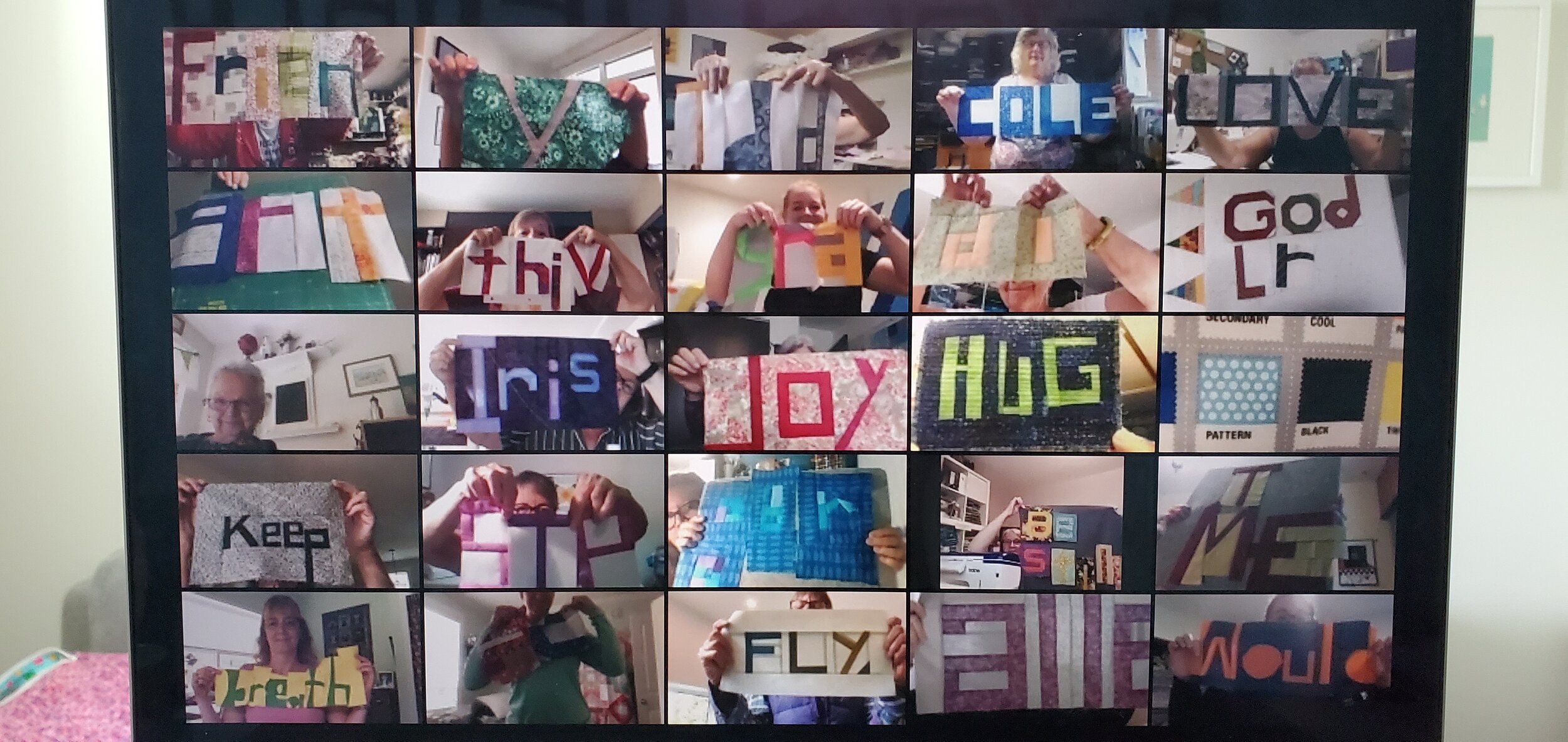
Cheryl Arkison quilt teacher

In the past few months of teaching online I think I have learned and improved as well. I’ve also made some observations in my classes. Talking to other teachers has given me some additional insights. I will admit, that I haven’t taken any classes myself, so there is more learning to do. With all that, I’ve got some observations I want to share with you.

10 Observations from an Online Quilt Teacher (Teaching Live)

  1. Just like in person, there are good teachers and there are not great teachers. Honestly, it might be the same on any given day. We’re all trying and for some, learning a new platform is not easy. You still have to keep your students engaged, perhaps even more so. You can’t just give everyone a task and then leave them be for an hour. This is an interactive experience. How that works exactly will be different for each teacher and each class.

  2. Not all classes translate well to an online, live environment. You’ve got to examine flow, interactions with students, and how the time will be spent. For example, people sitting in silence sewing in their own space is kind of boring online.

  3. Have either 2 cameras going or pre-record segments. When you want to do a demo of something specific it really helps to have a close up and/or overhead shot of the work. Being able to switch between these angles makes for a much better experience for the student.

  4. Don’t force anyone to be on camera or talk. Keep the invitation open, but respect the wishes of people. Also. no one has to sew or participate if they don’t want to, their level of participation is up to them. This is the student’s advantage to taking the class on their own. They might just want to hang out or they have their reasons for not participating as you anticipated, it’s all good.

  5. Take advantage of students being at home - get them to play with ALL their fabrics or supplies they may not have brought to class otherwise. Many students tell me they LOVE having access to all their stuff during a class so exploit that.

  6. Own up to glitches and be quick to fix things as best as possible. We are not all IT gurus and things will go wrong. Take the time to learn the platform as best you can and work through anything that is going on. Your internet connectivity is up to you, the teacher. The student’s is up to them.

  7. It’s hard to be running a live class AND manage the technical side of things. Using the guild or store’s account and having them manage entry and questions means you can concentrate on the classroom experience. If you are running your own event consider having an assistant or trusted friend managing the back end of stuff for you.

  8. People seem to be MORE engaged at home. Honestly, I was shocked at this. I think I’m a pretty good teacher but even I doubted people’s interest in a 6 hour online class. But it works! The comfort of being at home and choosing your commitment to the class, not to mention access to all your stuff, is a huge advantage for students.

  9. Recording classes delivered live is not okay, especially if it is done without the teacher’s permission. If we wanted to have a recorded class we would offer a stand alone one to buy.

  10. Build in both breaks and chat time. For one, the teacher needs to go to the washroom if it is a long class. And secondly, by making them formal, students don’t feel they are sneaking out of class. At the same time, adding breaks in your active teaching so people can chat enhances their experience.
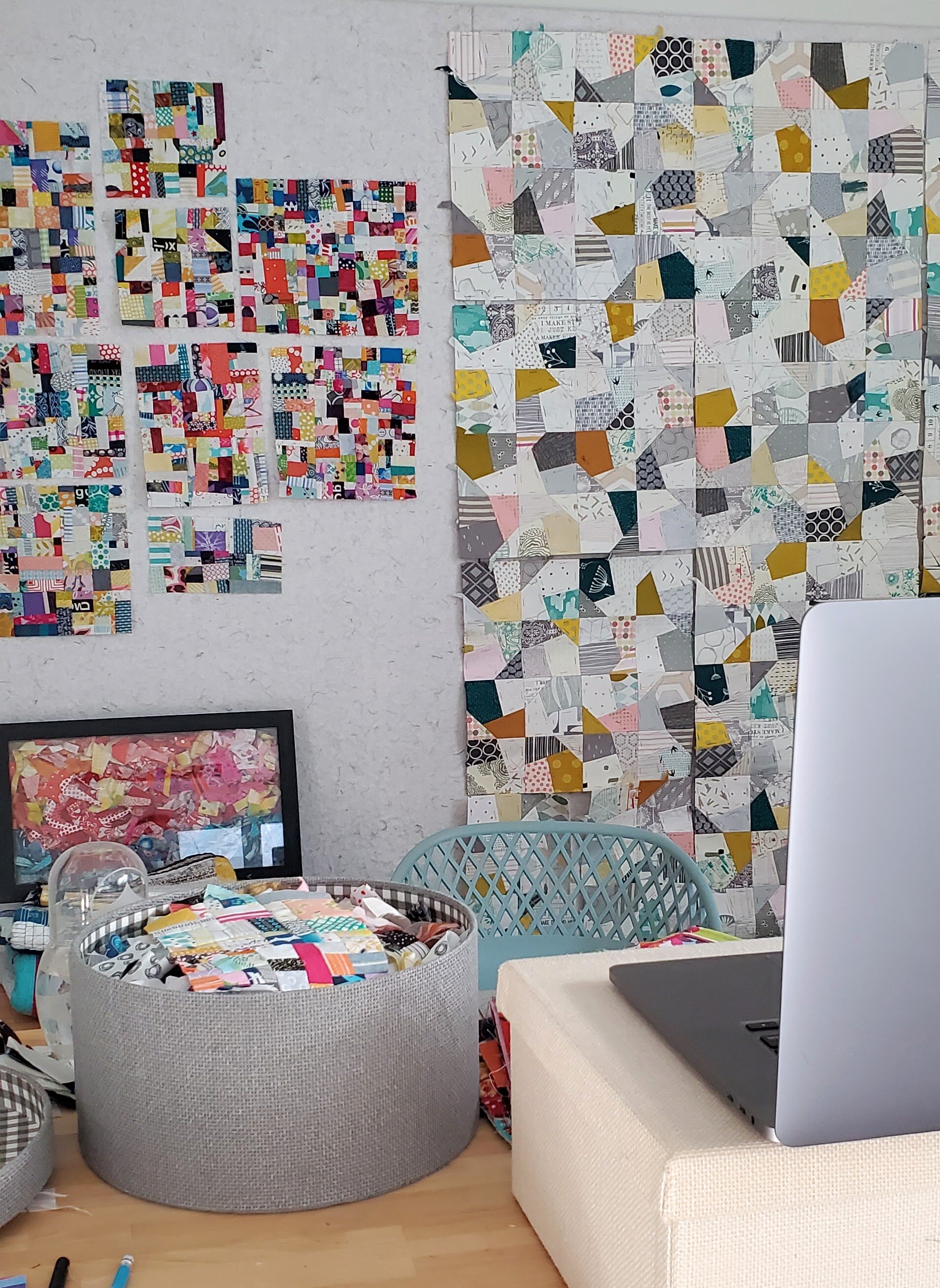
Cheryl Arkison Quilt Teacher

We are all hungry for connection. Guild meetings, hanging out at the store, taking classes together are all ways we quilters are used to connection. Switching to a solely online environment is new, difficult, and even scary for some. It’s one thing to be a chat or Facebook group, it is entirely different to be trying to learn and actually hang out together online. As a teacher I see my job as a facilitator of this connection, regardless of the class I am teaching. At the same time, I am privileged to be invited in to the shared space. It isn’t a responsibility I, or any teacher, should take lightly.

What about those of you who have taken classes? What would you add? What are some of the good and bad things you’ve seen in your own Zoom experience? How do you like Zoom compared to a prerecorded class? Add your thoughts to the comments section. We would all benefit from the shared experience.
Yes, There is Racism in Quilting

Stop the pearl clutching. Let go of your conventions.

Stop saying that politics has no place in quilting. It 100% does.

Stop thinking that white privilege is not a thing. It absolutely is.

Much is being said this week, much is going on this week. I feel like we are at a reckoning for civil action. People are FED UP with the systemic and blatant racism in policing, in society. Thousands and thousands are marching peacefully. Many are raging too. Quilting should be no different.

Like the White House was built by slaves, quilting was also built on the backs, the deaths, the enslavement of people. Cotton. Just think of cotton. Not a person among us should be free of the imagery, the reality, of a cotton plantation. White owners, black slaves. All for cotton. And what is it that is the mainstay of our industry? Cotton.

Of course I am not saying that current quilt shops, fabric companies, and designers are slave owners. But we must absolutely acknowledge that this industry arose as a direct result of slavery.

So, yeah, stop clutching your pearls.

When quilters want to use their skills and their creativity to make a statement with their quilts they are doing so with over a century of tradition behind them. Temperance quilts, church fundraisers, signature quilts all have something to say or show. Block designs acknowledge periods of history or events and we use them now not knowing. So many quilt blocks have Biblical inspirations, those are just as political as a modern interpretation of a raised fist. Quilters use quilts to raise their voices.

The people complaining that politics have no place in quilting are really saying that politics different than theirs don’t belong. It is about silencing a voice they disagree with. And more often than not it is about a white person silencing a voice that is coming from a person of colour or in support of. A perfect example of this is the quilt show reaction to the travelling exhibit Threads of Resistance.

So yeah, quilts always have, and always will be political.

My skin is white. That affords me a luxury of safety and comfort that many others do not have. I do not have to worry that I will be viewed as a thief in a store, just for being in the store. I don’t have to style my hair differently when shooting a class so that I look less ethnic. I am not questioned about whether I am in the right place, ever. All because my skin is white. If you need more explanation or white privilege and you haven’t been watching the news lately, this post is quite succinct. Here is a direct example from the quilt industry. Or take a look at the faculty of nearly every major show, and some of us may remember the defensiveness or organizations when it was pointed out. That is all white privilege.

Look at your book shelf of quilting books, or at the bins in your stash. How many of them were created by black quilters? I’m not saying that the companies are blatantly racist and excluding black designers. It is more that we are all conditioned to see white as better, myself included. I’ve benefited from that system, no doubt. That is white privilege. I had to sell myself, but I had a built in advantage. There are, you should know, a tonne of talented black quilters, designers, artists, and teachers including are Nicole Neblett, Chawne Kimber, and Carole Lyles Shaw. They deserve their spotlight too.

A few years back, it was either at Quilt Market or QuiltCon, a group of women came together to take a photograph. Their point was to show that they were all different people. It wasn’t a group of blonds or middle aged pattern designers, it was a group of black women. Ebony is not Latifah is not Rashida, yet people always want to mix them up. Why? Because they are all notable black quilters and seemingly people couldn’t tell them apart. Why? Because they likely weren’t seeing them as individual people, just ‘the black quilter’. People laughed at the stunt, but it was more telling of the industry than anything.

So yeah, white privilege exists and it is here in quilting.

There is no perfect way forward. And I know that people don’t want to hear that they are wrong or even get the hint that they are racist. Now is the time for all of us to look in the mirror, look at the words we say, and how we act towards all people. I am doing that, so should you.

Don’t be complacent, do the work.

Don’t expect others to educate you, educate yourself.

Don’t assume that you are without fault, we are all a product of history and a system.

I do sincerely hope that time is a reckoning. Here, as a quilter, I want to do the work to make those changes. So I will keep reading, writing, researching, making, listening, amplifying, and respecting. I encourage you to do the same.

As a start, I recommend the following:

The Social Justice Sewing Academy.

The work of both Carolyn Mazloomi and Faith Ringgold.

Checking out the collections of various museums like the Montgomery Museum of Fine Arts, National Museum of African American History and Culture, and the Berkley Art Museum. There is more to African American quilt traditions than Gees Bend.

Reading Empire of Cotton by Sven Beckert and How to be an Antiracist by Ibram X. Kendi.

Morning Make - January 2020

Learning poetry

Back in elementary

Haiku was the start

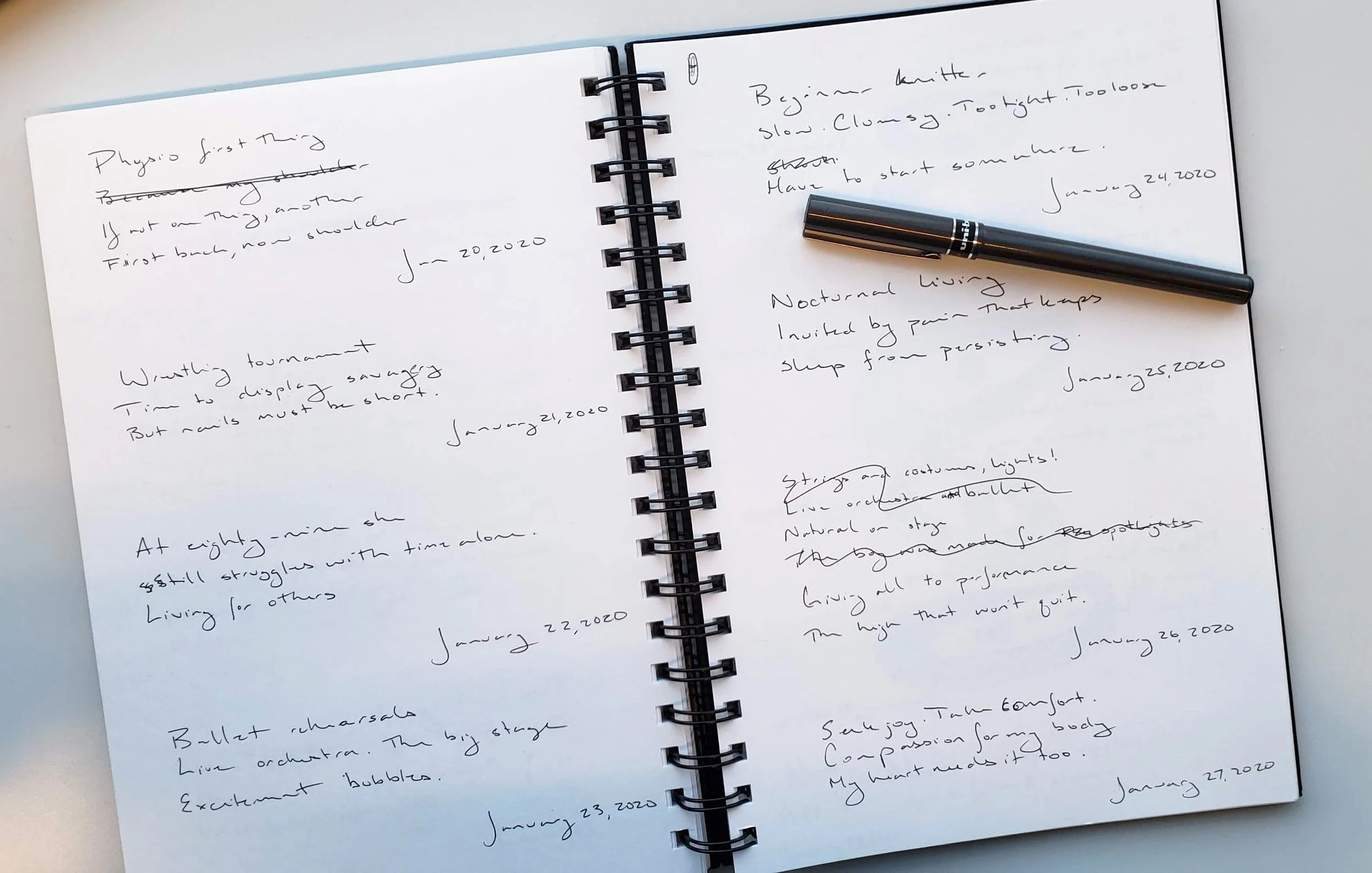
Cheryl Arkison Haiku

Do you remember back in school and the famous 5-7-5 syllable count of learning Haiku? We were taught it then because the perception is that they are easy, simple, elementary. And while you can write one following the count rule, that doesn’t mean they are any good!

Haiku is a form of poetry originating in Japan. Initially, they were written as objective, pictorial pieces. They usually described something in the natural world or made seasonal references. Quite often there are two subjects, contrasted through the visuals the words present. Haiku is subtle and can be both melancholy and beautiful.

For January I decided I would write one haiku each day. I threw out the subject conventions and mostly ignored the other rule about the subject contrast. At least, I didn't much care if that happened but tried to do it some times. Now, I am not a poet by any stretch of the imagination, but I do like words. I love the way we can express emotions and the sparseness of 17 maudlin syllables was inspiring. Most of the haiku reference what was going on in my life at the moment, so they serve as a diary too.

Here are some of my favourites from the month:

People I don’t like

Invading my dreams last night

Woke up feeling gross.

(January 10)

Lazy Sunday start

Because it’s damn cold outside

That hockey game though

(January 12)

Love overflows yet

It pools at my feet almost

Unconditional

(January 15)

Wrestling tournament

Time to display savagery

But nails must be cut short

(January 21)

Nocturnal living

Invited by pain that keeps

Sleep from persisting.

(January 25)

Seek joy. Take comfort.

Compassion for my body

My heart needs it too.

(January 27)

A daily habit

To jumpstart creative flow

And ease anxiety.

(January 29)

February is here and I’ve laid the pen down for a needle and embroidery floss. Follow along with my Morning Make on Instagram. Better yet, join in! #morningmake is the hashtag.

Contentment versus Happiness in Life and Quiltmaking

Where do you find happiness in your quilting? Is it is the process or a specific part of the process? Or is it in the finished quilt?

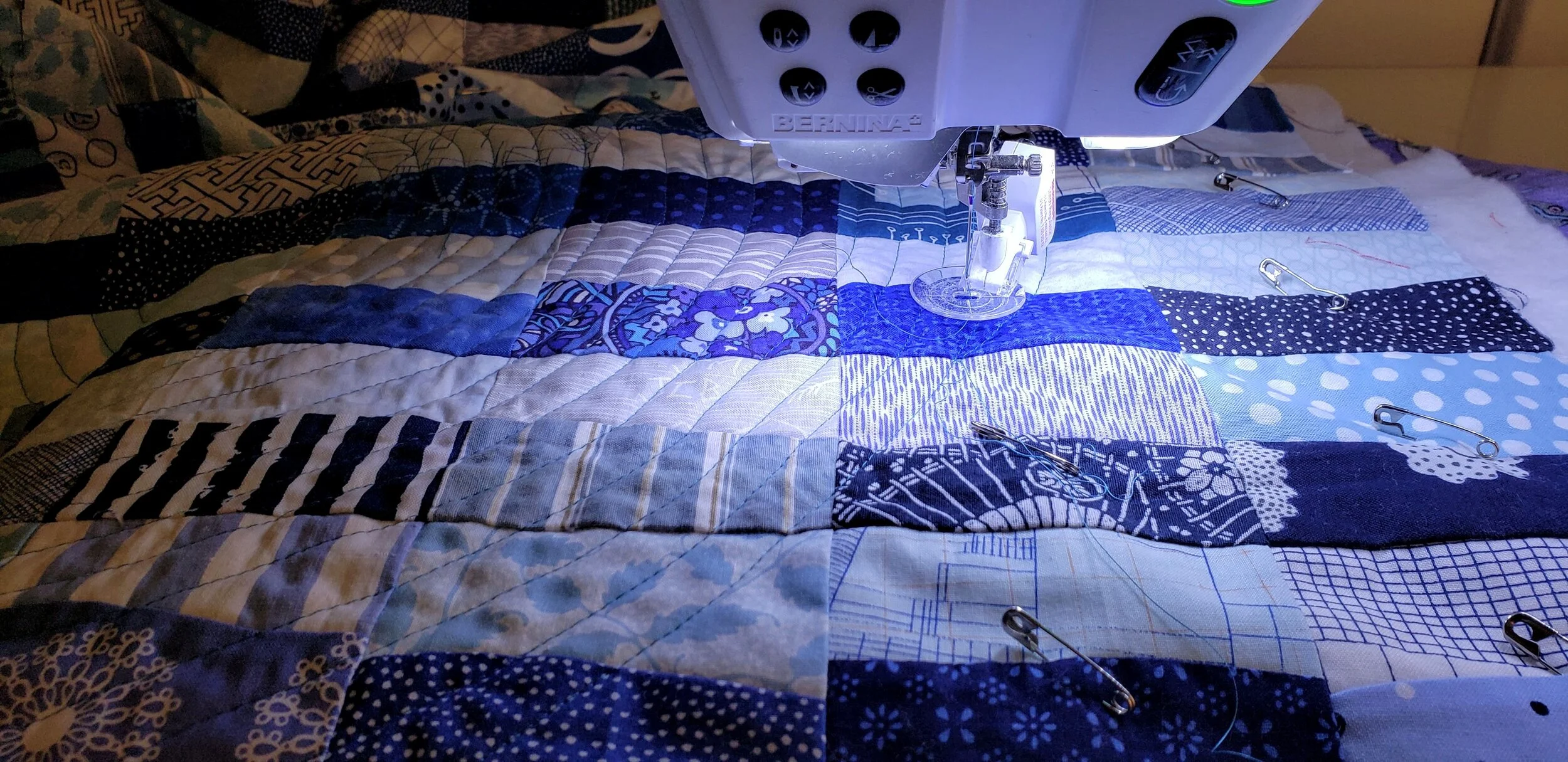
Machine Quilting Cheryl Arkison

I’ve been thinking a lot lately about the difference between contentment and happiness. Here is what I shared with my newsletter readers last week:

So many of us are always on the look out for happy. We think happiness is the ultimate goal. We are wrong, I see now. Contentment is what we should seek. 

Think of it this way. When you have a baby the exhaustion level, physically and mentally, is high. So is the amount of stuff and drudgery in your day. But then the day comes that they genuinely see you for the first time, the day they roll over, the first night they sleep for 6 hours straight, pulling themselves up at the coffee table, crawling, walking, the first word. These milestones are all the happy we desire. They are excitement and pure joy. But they aren't really enough to get us through the day to day, the repetitiveness, the mess of parenting a baby. Unless, of course, we can embrace the naps on our chest again, cleaning the favourite toy of spit up again, the screeching, and even the diapers. Contentment is when we can look at all of that and still smile.

Happy is an exclamation point. Contentment is a smile. 

If our lives are filled with nothing but exclamation points it will be fun, sure, but also exhausting. Here's another way to think of it. Imagine your last good vacation, if you can. Was it all adventures - zip lining, horseback riding, spicy cooking classes, the tallest building in the city, surfing lessons? Probably not. But maybe you did one or two really exciting things and then otherwise enjoyed strolling the beach or city streets, reading a book, a delicious bakery where you lingered. If it was all the adventures - the exclamation points - it would be a lot of fun, maybe a bit stressful, and very, very tiring at the end of the day. But those quieter moments, the ones that make you smile and sigh are delightful.

Regular life needs to be a combo of both. However, instead of seeking happiness, we should be looking for what makes us content. More importantly, we should be looking around us and realizing that what we have is good and brings us contentment. You might be surprised at what you see.

Then I was speaking with a lovely lady in my neighbourhood this week, also a quilter. She spoke about how she will look at a finished quilt and wonder just how she got there. Like suddenly it is finished and the making of it has slipped away. Yet the making of it is where her peace is.

Contentment = enjoying the quilt making process.

Happiness = the finished quilt.

So I suppose that now that I’ve thought of it this way, I see my love for the process in an even better light. And it explains my defence of unfinished quilts. I would much rather have contentment, a smile, in my life on a daily basis than the energy of an exclamation point. Don’t get me wrong, happiness is awesome, finished quilts are awesome, but finished quilts only come around a few times a year. Why hang all my joy on sometimes success when I can have peace everyday in the making?

To that end. I did finish a few quilts recently so I was happy to pull out an old, favourite project. I’m jazzed for it and sneak in to the sewing room in spare moments to put together just one more string of Itty Bitty curves. The piecing makes me feel joyful, the work growing gives me all the smiles, and the daily making is 100% about contentment.

Improv Curves Cheryl Arkison Tag Fabric