

 For awhile there this environmentalist was feeling a little jaded. Last summer I was gung-ho on green crafting, searching for gorgeous and environmentally friendly fabric, and actually using my scraps for something. In truth, all I've done are a few dying experiments and a spreadsheet on energy and water use associated with quilting. Beyond getting wrapped up in being a mom to two gorgeous babies, I simply got excited to quilt. Oh, and that spreadsheet is on the old, old computer currently in storage.
 Having spent my entire professional career working on environmental issues (climate change, sustainability, and green energy) it kind of made me mad that it all seemed, well, trendy. It was eco-this and green-that. Sure, it was good to get so many of the issues in the public eye, but so much of it was greenwashing. I was just about to really burn out on it all when the economy went to pot and that news replaced anything environmental. Hmm, not sure what's better.
I did, however, go through my posts and was reminded that I promised a shot of garbage. Okay, the exact waste from the construction of one baby quilt, not garbage. This was absolutely everything leftover from the project. Useful or not, it's all here. The leftover spool was recycled. The thread and tiny bits of fabric were left outside for the squirrels as they built their nests. I sorted through all the fabric scraps into useable and non-usable scraps. There wasn't much in the way of batting scraps because I cut it from a much larger batt. And yes, I threw out the rest of it - I don't do much other stuff in the way of crafting to even use it.
Since my tirade a year ago I do have to say that I've changed a little. Maybe it's because I've done a lot of quilting in the last year? Maybe some of that trendiness started affecting me. Either way, I've been looking at my scraps with a keener eye. And I've become more aware of waste from quilting before I even produce it: I am even more careful when I cut, thinking about what the leftover pieces might be useful for (doll quilts!); and I cut all batts from one king size batt until their are no usable pieces (7 quilts from the last one!). Now, to get back to that dying.
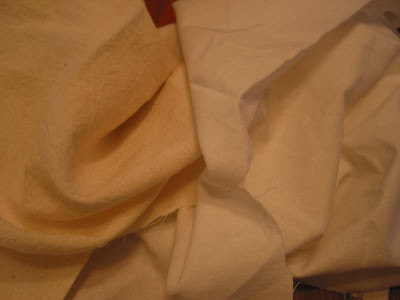
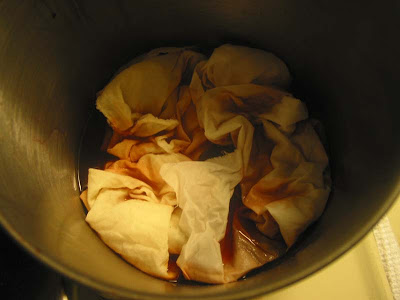
 After soaking in the mordant I squeezed out the excess water, but did not rinse the fabric. Then I added it to the dye and simmered for another hour, stirring to make the colour a bit more even. After an hour I turned off the burner and went to bed. This is what it looked like the following afternoon. We decided to go swimming, so I never got to it in the morning.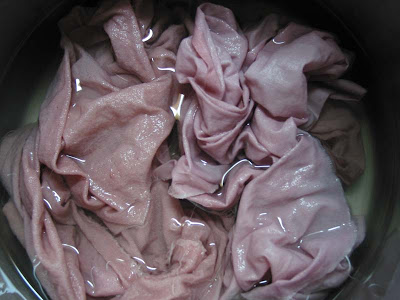
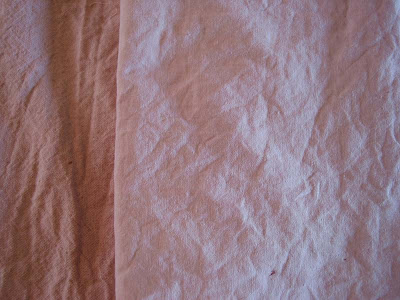
 Inspired by the look of the jellybags when I made black currant juice I decided to try some natural dyeing the other day. I saw

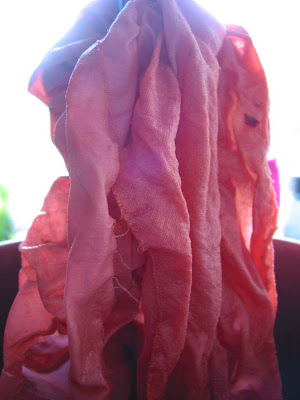
 Don't you love the colour? Here is the fabric in the morning, just as I took it out of the dye.


