
"books"

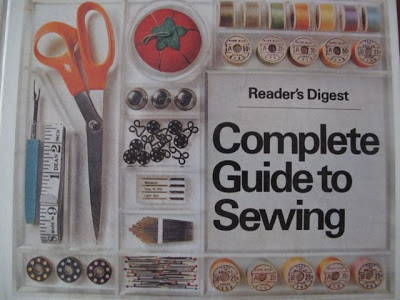
Reader's Digest Complete Guide to Sewing

Pulled this one out of the vault, didn't I?

My Dad handed this book to me a few months ago. I'm sure it came with the decades long Reader's Digest subscription our family had. For the last few decades it's been hiding in a table at my parent's place. Seeing as I sew, Dad gave it to me. I was taken in by the cover immediately. Isn't it fantastic?
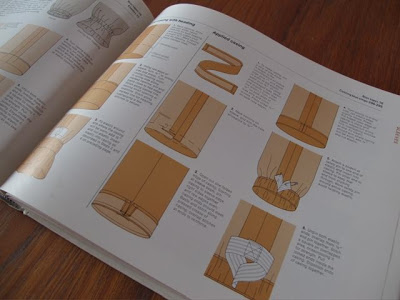
It's gloriously retro and fantastically detailed. If I ever decide to actually sew clothes I guarantee I will pull this out as a resource. For now I can be entertained and even slightly inspired by the 70s styling. Just check out this bed cover! There is definitely a quilt in that.
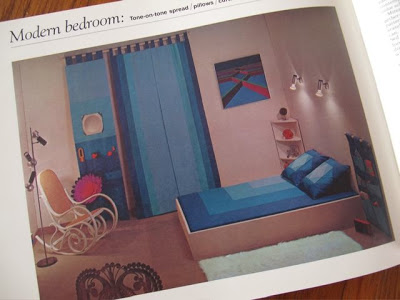

Some of the sewing projects included remind me of many that I've seen on blogs and in books in the last few years. Napkins, placemats, playmats, wall organizers, bags, pillows, and even soft animals and toys. Goes to show that not everything is new.
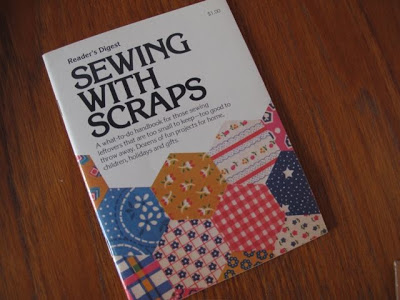

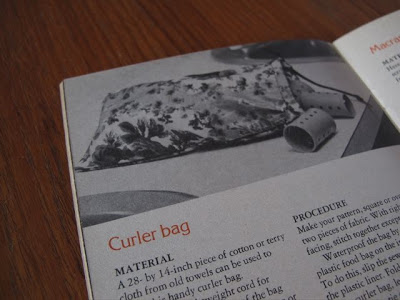
The book also came with a little pamphlet about sewing with scraps. My favourite project, by far, is the Curler bag. Now does that ever bring back memories! My stick straight hair tied up in hard plastic curlers after the Saturday night bath. Just for the hope of curls for church in the morning. Curls that were long gone by the time church was over. I wonder if the people sitting behind me ever watched my hair fall instead of the service? I'm sure that's what I would have done with my head in front of me. Shhh, don't tell my Dad.
Guide to Machine Quilting


Don't let the cover fool you, modern quilters. Hands down, I believe this is the best resource book for machine quilting out there. You may never do trapunto or feathers, but even for your basic free motion stipple, this book will help.

Diane Gaudynski is the machine quilting guru. Award winning, she has every authority to speak on this subject. And speak she does. She teaches and blogs, so you can find more from her all over the place.

Her book is full of exercises, tips, supplies, concepts and trouble shooting. Whenever I am having a problem with something, anything, in my quilting this book is the first thing I pick up. I almost always find the information I need to solve the problem. Likewise, this is an excellent inspiration for technique and free motion ideas.
The book covers set-up and basting, important factors in actually enjoying machine quilting. Yes, enjoying. When it goes smoothly, machine quilting is actually kind of exciting. You see your movements, your efforts literally changing the weight of the quilt in your hands. For me, that is a thrilling thing in the process of creating my quilts.

It does seem odd to me that there are some actual quilt projects at the back of the book. Yes, they show off the quilting, but it seems kind of irrelevant. I would have rather seen more examples of quilting techniques.

I strongly recommend that everyone keep this book in their library. It is worth it.

Thanks to Elle for introducing me to the book in the first place.

Hobo Quilts

Every now and then a book completely grabs you, unexpectedly. You aren't sure why you are drawn to it, or what holds the appeal when it seems to obviously not your taste. Regardless of whether you think you should like it or not, you do. And you can't stop thinking about it. So you buy it, even when you aren't supposed to be spending any money.

Hobo Quilts is the most recent addition to my personal library. It's a book filled with over 50 block patterns and 20 quilt patterns from those blocks. It's more than that though. It is also filled with stories from people who rode the rails, fed them, entertained them, policed them, and more. Part oral history, part quilt book.

The patterns are based on a symbol glossary common to people who rode the rails. And the stories are all from archived collections and the author's family.

Each of the block patterns is accompanied by a story. The patterns themselves are quite simple. A life-size line drawing of the block with cutting instructions. That's it. It's up to the reader to put the block together. Some other reviews do caution that the cutting instructions and finished block do not correlate. For an experienced quilter, however, none of the blocks are so difficult that you couldn't adapt it for your own taste and size. There is a pretty good split between applique and pieced blocks. Here are some of my favourites - for the design or simply the name.


On first glance, these blocks may not appeal to the modern quilter. The history attached and the fabric choices in the book are not likely to appeal to someone used to working with large scale brights. But the simplicity and graphic nature of many of the blocks should not be overlooked. Combined en masse many of these blocks would make a striking, modern quilt. Your fabric choice and scale of the block could radically change from what you see in the book. It just takes some imagination.

Debra G. Henninger
2010
Krause Publications

Eye Candy

These books are feast for the eyes! Full of bright and very energetic quilts, the two Material Obsession books are some great eye candy for the modern quilter.

Actually, I think these books would be fantastic transitions to modern quilting. There are a lot of elements and inspirations from typically traditional quilts. The adaptations, designs, and fabric choices make them decidedly modern. They are bright, they utilize an array of popular, designer fabric, and many of them are updates on traditional inspirations.

Both of the books are essentially books of patterns, with a brief discussion on basic techniques. No extra text in there, but loads of pictures. To me, they are books I would pick up for some new ideas. I'm not one to go out and make THAT quilt specifically, but there is definitely a lot to inspire from construction techniques, colour choices, or block design.

If you did want to make THAT quilt from either of the books, know that these aren't beginner quilts. Some of the patterns are easier, but a neophyte would probably have a hard time getting through most of them. Confident beginner willing to try? Go for it.

The book runs the gamut of techniques as well. I really liked the applique quilts and was drawn to all the angles in some others. They advocate a number of speciality rulers. If I were to make one of these quilts I would hesitate before buying some of the rulers and probably want to paper piece instead. That's probably just me, though, as I don't like a lot of one-use items around.

The photos are stunning and literally peppered on every page. Tonnes of detailed shots and a plethora of quilts draped here and there kind of shots. I did not like that you didn't get a full on quilt shot until the end of the pattern in Material Obsession. Material Obsession 2 does have small images on the first page of the pattern, but then they would face that page with a draped quilt shot. I'm not a fan of the draped quilt shot, personally.

The books' authors, Kathy Doughty and Sarah Fielke, were owners of the drool worthy store Material Obsessions in Australia. Kathy still runs the store, but Sarah is on her own now as a designer and the creative director at Sewn.

You know me, I'm not a pattern follower. I will, however, be returning to these books every now and then for a little inspiration. So many details to take in.